

You are using an out of date browser. It may not display this or other websites correctly.
You should upgrade or use an alternative browser.
You should upgrade or use an alternative browser.
Burn of the Day
- Thread starter jalil
- Start date

Habz786
Resident Artisan & Ouddict Co-Founder
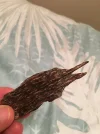
@SydnorIII any pics of the chips?

hawk_757
Barn Bro
@SydnorIII any pics of the chips?
Attachments
hawk_757
Barn Bro
No, but I wish I did lolBeautiful....did you smell the Vietnamese ants nest from Tony? One of the best woods i have smelt



alcolado glacial
True Ouddict
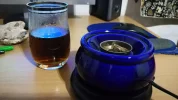
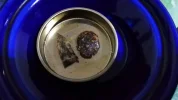
wild vietnamese on the burner today bought from habz786 originally from Tony Bolton.
Beautifull scent ,dark and sweet aroma, relaxing me nicely.
Beautifull scent ,dark and sweet aroma, relaxing me nicely.
Habz786
Resident Artisan & Ouddict Co-Founder
Myitkyina Burmese chip from M. Arif,
slowly heated on an electric burner, fills the office w/woody goodness.
I love burmese woods the sweet bitterness is great with a hint of orange peel. What other types of wood you heated and enjoyed?

Anwar
True Ouddict
I love burmese woods the sweet bitterness is great with a hint of orange peel. What other types of wood you heated and enjoyed?
I've gotten an array of Malaysian chips. Among them;
Sinking Grade Wild Perak State North Malaysian Aquilaria Malaccensis Ants' nest Oud chips. Among its notes:
•Hay, Pine, and wet soil. An underlying sweetness.
•Camphor, ghee, fresh dough. Haze of cinnamon. And carmalized sugar.
•Raise the temp; strong cinnamon, mud, tar.
•Lower; hay and faint berries.
Anwar
True Ouddict
I love burmese woods the sweet bitterness is great with a hint of orange peel. What other types of wood you heated and enjoyed?
Don't be fooled by the images. They are tiny.

Apologies for spamming the threads, but from previous experience, we have noticed that members do not take note of messages on the forum announcement, hence we have had to cover important threads.
Dear Forum Member,
We would like to notify you of this year's annual International Artisanal Agarwood Fayre, which will be held between 11am and 6pm in Woking, UK, this Saturday 14th April.
What is the International Artisanal Agarwood Fayre?
It is your chance to come and meet forum members as well as experience:
- The latest offerings from Imperial Oud, La Maison Khenata and Al Hashimi
- Private collections of Oud oils and agarwood
- Some of the rarest Oud oils and woods available
- Scent notes of different agarwood species and grades that will be burned at the Fayre
- Behind-the-scenes glimpse of the agarwood industry
Participating Vendors.
Imperial Oud
La Maison Khenata
Al Hashimi (products only, as Malik Al Khadra is unable to travel in time)
Free Oud Prizes!
Participating vendors have pledged samples to be given out as prizes during the Fayre!
No Entry Fee
Please Note that there is NO CHARGE for entry and if you are from the UK, this is a golden opportunity to seriously expand your experience and knowledge of Oud. We have confirmed attendees traveling from the USA and France, so if you are local, make the effort to come as the rewards are huge.
Location and Directions.
By Car: Woking is near Heathrow Airport and off Junction 11 on the M25.Once you exit junction 11 you follow the A320 into Woking.
By Train: There is a train service from London Waterloo Station that takes 25 minutes to reach Woking. The venue is 10 minutes walk from the station.
If you would like to attend, please notify Ouddict or Habz786 via PM to receive further details.
Yours Faithfully,
Ouddict and Habz786 on behalf of Ouddict Forum Management

Rai Munir
Musk Man
'Small is beautiful'. Confirmed and approved.
Sir, I want your guidance regarding one thing: Coal or electric heater, which one is to be preferred? Putting aside subjective preference.
Thanks
Anwar
True Ouddict
Sir, I want your guidance regarding one thing: Coal or electric heater, which one is to be preferred? Putting aside subjective preference.
Thanks
I'm no guide. Here's some of what the Agar Aura proprietor said:
Gen3 wood heating consists of “pumps” and “cruises”. And it requires veryhigh grade agarwood. Ideally, you’ll use an electric censer with a voltage adjustor, but if you don’t have that then you can still have the Gen3 experience on charcoal.
The idea is to expose the wood chip to a few different levels of heat systematically. Coupled with a voltage adjustor, an electric censer (like this one) is of course the most convenient option. With plain ol’ charcoal, you will need to build two mini mounds of ash on top of the lit charcoal, one mound bigger than the other. You’ll then have to juggle the wood chip between the two mounds and even (briefly) place the chip directly on the charcoal.
Yes, the core concept of Gen3 heatingIS low-temperature emission of the oleoresin vapors. But the idea is to enjoy the experience of “the first whiffs” over and over.. and over again.
To do this, the chip is allowed to exude however much fragrant vapor that it can, at the lowest possible heat (we want to release the fragrance, not burn it!), but it will need gentle nudges to keep this going. i.e. bursts of higher heat or “pumps“, followed by a drastically lower heat setting or “cruises“.
Typically, the resin in western (Indian and Indo-Chinese) species of agarwood is the softest and so the temperature fluctuations are less dramatic, whereas far-east (e.g. Papuan and Filipino) species have much harder resin, that will require significantly higher-temperature pumps.
A typical Gen3 style Cambodian agarwood session can look something like this:
1) Select a 2mm x 2mm x 5mm sliver of agarwood (too thin or too thick, it won’t be optimal)
2) Pump: set the voltage to MAX until the moment you start to smell the vapors just starting to rise
3) Cruise: instantly drop the voltage to a lower setting where the vapor still rises in earnest
4) Cruise 2: drop the voltage further down to ensure acrid notes don’t emerge (some of the oil, that was acting as a heat buffer, has already vaporized so some of the wood fibres can now start to combust = acrid smell)
5) Pump 2: briefly crank up the heat again to liquify oleoresin in deeper pockets inside the wood
6) Cruise 3: drop the voltage down even lower than steps #3 and #4
7) Pump 3: once you start to sense that some acrid notes might emerge, remove the chip and let it cool down for about 5 seconds. Flip the chip and place it back on the censer and verybriefly crank up the heat one last time
8) Cruise 4: lowest temperature setting cruise.
So what’s actually going on here?
By liquifying/liberating trapped pockets of oleoresin via pumps and then releasing them via cruises, what you’re doing is constantly re-living the “first wisps” experience over and over again.
Best of all, you get to experience that with not only the lightest compounds, but also the deepest heaviest compounds from the innermost pockets inside the wood too. Booyah!
Your arch-nemesis (at least in the case of the Gen3 heating style) is the aroma of combusting wood fibres. The wood smell is not necessarily a bad thing, especially in the case of oh-so-rare batches of ambiently-aromatic wood (did you miss out on our Filipino wood? *gasp* shame on you!), but the core principle behind Gen3 is simple: release the isolated aroma of the “good stuff” aka “the black stuff” aka the oleoresin, without the interference of other scents from the wood.
After all, we reach for dark, sickly resinated agarwood and not pale cream-colored slabs of bunk grade wood, right? Its the “good stuff” we’re after.
Last edited:
Anwar
True Ouddict
Coal or electric heater, which one is to be preferred? Putting aside subjective preference.
Thanks
Others, like the "Exotic Scents" reviewer mention that coal is ideal for fumigating the skin, clothing and hair. I have used electric burners, but not ceramic, and I've used coal. The best fragrance experience I've had though, is crushed chips on aluminum foil, on top of an electric stovetop. The heat, to me, is more even than my incense burner and more powerful, capable of low temp heating and high. I have experienced more with it from the same wood than with other burners, finding dozens of fragrances from some chips, to the extent that a friend and I would write lists of everything we found coming out in the smoke and/or vapor. The only problem is that it produces a lot of heat, so to get close, one must be patient with the slow roasting of one's face.
Last edited:


Similar threads

- Replies
- 0
- Views
- 746


