im not sure if you got your answer, but a great way to test out mixes is to make testing dilutions. say 10% of each oil in alcohol.
And mix them in the proportion you want and they should turn out the same with the undiluted oil. For example the proportion of 1:3 between two pure oils is the same proportion of two 10% dilutions mixed 1:3 together.
While this might sound right logically (what I highlighted in bold), I'd suggest you put it into practice and find out.

In perfumery, the dilutant plays a role in the end smell of the whole composition.
Some perfumers would like to dilute a specific material in let's say DPG for one purpose, and in ethanol for another purpose...( not to be mistaken with diluting materials for storage, that's a different thing).

in a nutshell, try it out, apply this and I'm sure you'll find some very interesting things. it's part of the learning journey.
Thanks for the tip. I did notice that oud diluted in perfumers alcohol does smell slightly difference than when applied directly undiluted. It's not only that the smells is weaker, but slightly different.
 
Thanks for the tip. I did notice that oud diluted in perfumers alcohol does smell slightly difference than when applied directly undiluted. It's not only that the smells is weaker, but slightly different.
Exactly.

This is why you only do this if your goal is to make a spray perfume based on alcohol. If you want an oil based blend, you start your design with drops. And if you want to dilute your oils, you use an oil base as a dilutant which will be part of your design. Not ethanol.
 
Exactly.

This is why you only do this if your goal is to make a spray perfume based on alcohol. If you want an oil based blend, you start your design with drops. And if you want to dilute your oils, you use an oil base as a dilutant which will be part of your design. Not ethanol.
Hey G, wondering if there is anything I can do about tinctures using perfumer's alcohol, to lessen that really strong smell of alcohol?
 
When mixing oils, we ask ourselves what is the result of mixing each oil with certain notes that distinguish it, for example, if we mix two similar types of oils, we will not get the desired benefit, for example, if we mix from the same region, oud oils from Khaoyai with Prachin from Thailand, both from the same region, the first is a mountainous region and the other is a plains region, and they have almost the same aromatic line, there is no desired benefit from the combination due to the repetition of similar aromatic notes. But if we bring oils from different regions with different aromatic notes, for example, not limited to, such as honeyed Trad oud oil with fruity Cambodian oud oil with Indian oud oil from Naqland, we find that the result of the combination for the official lines carries the following specifications: honeyed, fruity, incense, with diluted animalic notes, with what the combination carries of other deep notes that add beauty and depth to the combination. For example, if you wanted to add another characteristic, such as the smell of clay, you would add, for example, oud oil from Kalimantan Malino, and the combination becomes honeyed. Fruity, earthy, incense, with subtle animalic notes.
 
Hey G, wondering if there is anything I can do about tinctures using perfumer's alcohol, to lessen that really strong smell of alcohol?
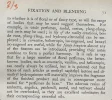
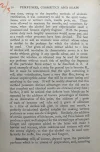
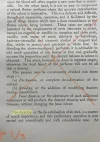
there is a section in Poucher's book on perfume making on "pre-fixation" and deodorizing alcohol. I think this is more about getting crudely distilled alcohol with off notes to smell more neutral though. The techniques for deodorizing alcohol involve making it into a mild tincture. Small amounts of Orris, ambergris, benzoin or other resins are mentioned if i recall. Edit: found the pages!
 

Attachments

  • [Ouddict.com] Oud Oil Mixing
    IMG_9382.webp
    117.9 KB · Views: 102
  • [Ouddict.com] Oud Oil Mixing
    IMG_9381.webp
    105.2 KB · Views: 91
  • [Ouddict.com] Oud Oil Mixing
    IMG_9380.webp
    106.6 KB · Views: 89
Last edited:
Hey G, wondering if there is anything I can do about tinctures using perfumer's alcohol, to lessen that really strong smell of alcohol?
Lol at "G".

Let's say you have 500ml macerated.

Decant 8 to 9ml in a sprayer and add 1 ml of distilled water. Then you can enjoy your tincture's smell with that firey initial blast.
 
there is a section in Poucher's book on perfume making on "pre-fixation" and deodorizing alcohol. I think this is more about getting crudely distilled alcohol with off notes to smell more neutral though. The techniques for deodorizing alcohol involve making it into a mild tincture. Small amounts of Orris, ambergris, benzoin or other resins are mentioned if i recall. Edit: found the pages!
This is incredible!! Will download and print. Thank you Mr P.
 
I also have those ajmal oud oil, want to give it a try, but dont have proper tools yet. Could you share your tools to do the mix? Thnx
I'm not sure who you're talking to since you didnt quote anyone, but if you want tools for diluting oils to test recipes then they're:
1. Bottles for the diluted oils, preferably glass, with droppers built in
2. Droppers (unless included in the bottles)
3. sensitive scales, 0.01 or even better 0.001g
4. your raw oils of course
5. scent strips
6. optional : 1 or 2ml spray bottles to macerate and test the recipe in
7. Also optional but highly recommended: a label printer. It helps me a lot and makes making labels for both the dilutions and recipe samples a breeze, Niimbot brand is good and cheap, connects to your phone via Bluetooth.
 
Last edited:
Top