IMG_1722.jpeg

IMG_4943.jpeg

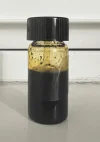
My first maceration! Gold ambergris in Mitti attar from An Najwa. I made this last night and I’m only including both photos to show how much darker it is now. I put the bottle under my armpit while I was watching TV last night for heat and again earlier while reading and I’m thrilled at how quickly the ambergris has dissolved. I smelled it this morning and it had amplified the mitti clay scent. I just applied a tiny dot and now it’s grabbed the sandalwood aspect and ramped it up to 20. Deeeeeep sandalwood, spice and burnt sugar smell. I can’t wait til this has fully developed!
 
Last edited:
Now that I have my own ambergris I’m tempted to put it in everything. I won’t, but I’m excited to use it more, but I’m interested in it as a background player. I know that it’s meant to be an amazing fixative and transformative material and I wonder at what ratios it’s effective. Of the stronger macerations I’ve sampled from others they've all been pretty, um… Gross? Except For the one Mesoud used to make. That is the only one I could imagine wearing on its own and even then I’ve had amazing results putting the tiniest amount of it in other things Like magic and I’ve had to question whether it’s really as powerful as it seems.

Both of the pieces I have are extremely fecal, but I can smell top notes that are beautiful and addictive. I can’t imagine myself enjoying it at a 20% or higher ratio. Does anyone have experience using it as an enhancer? Is it smarter to make one concentrated maceration and only add a small amount to other ingredients? Or to add small bits of the amber to those ingredients on its own? I can see how both would be useful. Like if I were to make a 30% ratio in sandalwood I could see adding drops of that to other sandalwood to enhance it. But there might cases where I don’t want sandalwood to influence a blend or ingredient. I guess the answer is to just go for it and see what happens. I’ve never smelled it on its own with Oud. I can easily imagine it could be powerful but I don’t have any ouds that I’m willing to just throw in a chunk and see what happens.
 
@Shiningrobes
I made two bottles at 10% one White and one Brown, both are powerful so I just and drops a little at a time like three drops should give me a amber note as a fixative you just need a trace amount.
Thank you! That’s the kind of information I need. I can definitely see that being the case. Already my maceration after two full days has changed so much. I’m just starting to get hints of the note that labdanum is meant to evoke.
 
Joined forum to specifically exchange ideas in this thread. Longtime oud enthusiast. Enjoy making my own attars.

Ingredients I use routinely:
Rose de Mai absolute
Turkish Rose absolute
Rose Supreme Bulgarian absolute
Rose bourbon absolute
Jasmine sambac absolute
Tobacco, Burley EO
Vanilla, 12% EO
Amber EO
Frankincense EO
Myrrh EO
Cinnamon EO
Sandalwood Album EO
Sandalwood Album Signature Mysore EO

Carriers:
Jojoba, natural and clear
Almond, sweet
MCT or fractionated coconut oil

Mostly I use base of 2% final Sadalwood EO in almond oil. Dilute EO and absolutes to 20% prior to mixing. Total EO and absolute to final mixture is maximum of 3 - 5%. I've found often less is more and keeps one from producing muddy attars. All essential oils and absolutes are either Hermitage, Freterworks, Eden Botanicals or Nature's Gifts.

Anyhow, wondering first and foremost your ideas on Sandalwood oil? How do you generate Sandalwood base oil from Sandalwood EO? Concentration? I've found when using too much it dominates. I use 2% most often.

Secondly, can you help with attar recipes including tobacco and vanilla? I would like to experiment and need starting point reference.
 
Some of my favorite simple recipes.

Sandal Rose
2% Sandalwood Signature Mysore EO (Hermitage Oils)
3% Rose de Mai absolute (Hermitage Oils)
Both from dilution to 20% in MCT.

Mixed in 6 mL glass bottle and left overnight.
600 uL of 20% Sandalwood EO in MCT
900 uL of 20% Rose de Mai absolute in MCT
Next day, addition of 4.5 mL of almond oil. Let sit a week before it pops well, but smells amazing immediately after mixing.

Pursat, Burmese or Malaysian oud on back of hands and neck. This oil on wrists, elbow and behind ears. Never in same spots.

Sandalwood Jasmine Sambac
2% Sanadalwood EO final as above
1.5 - 2% Jasmine sambac final as above.
Jasmine less than Rose, as Jasmine Sambac has complex character that competes with Sandalwood. Too high and the floral notes are lost.

This pairs well with Thai ouds or sharper, more citrus scented oud oils. The musky Sambac is pleasant balance.

Please feel free to provide any critique and feedback. Won't hurt my feelings. I'm a novice and here to learn.
 
Last edited:
@Shiningrobes
I made two bottles at 10% one White and one Brown, both are powerful so I just and drops a little at a time like three drops should give me a amber note as a fixative you just need a trace amount.
When blending raw ambergris into sandalwood or Oud is there an amount of time that needs to pass like musk before it becomes noticeable as an addition?
 
I must have read your comment elsewhere or seen ASO comment because I had the six month mark in my head. A good amount of time makes sense because where my Mitti ambergris started off pleasant with an underlying depth it’s now gotten to the point where I’m starting to wonder if I over did the amber or just made an all around mistake combining these. It basically smells like an ashtray right now. Ive decided to have faith in the process and just trust that so many people before me over the centuries actually know what they are doing 😉. Mitti and amber might not be the most ideal combo in the end, but I’m fairly sure what I have now is just one stage of the process.
 
Last edited:
The question of picking the ideal maceration time is an interesting one. There are a couple of different things going on I imagine.

One is the simple extraction of the scent by diffusion until it has reached equilibrium and the concentration in the solids is the same as the concentration in the oil. This is some thing you can accelerate a bit by changing particle size and temperature of course. I used to think of it strictly in these terms.

My experiments with blending lead me to recognize what is common knowledge among seasoned perfumers: that the chemical interactions between the oil and the extracted aromatic substances are important and take time, so even after the extraction may have gone to completion, the scent may not have reached maturity due to the need for chemical reactions to occur.

As you all know when making perfume it's not uncommon to allow the ingredients to combine for several months, up to a year - that is without any kind of extraction having to be part of the process.

I guess it is reasonable to assume that something similar applies here - so maybe even if working with a fully extracted musk or ambergris resinoid that waiting period would still be there.
 
Last edited:
As a biochemist, I cannot comprehend how the reactions take such a long time if we assume solution has reached equilibrium. Applying just +10 degrees C above ambient to the solution would accelerate the rate of maturation very much. With chemical reactions involving reduction and oxidation, aromatics are hydrocarbons, one would expect the production of CO2 or CO gas? Is it common to find sealed containers building pressure with time? Also would seem worthwhile to mix the containers often, place them on an orbital shaker or rotator. Limiting the reaction to diffusion only will slow the process considerably.
 
As a biochemist, I cannot comprehend how the reactions take such a long time if we assume solution has reached equilibrium. Applying just +10 degrees C above ambient to the solution would accelerate the rate of maturation very much. With chemical reactions involving reduction and oxidation, aromatics are hydrocarbons, one would expect the production of CO2 or CO gas? Is it common to find sealed containers building pressure with time? Also would seem worthwhile to mix the containers often, place them on an orbital shaker or rotator. Limiting the reaction to diffusion only will slow the process considerably.
You are thinking of this on a more profound level, and I would love to get a more sophisticated take on what is actually happening and how long it is likely to take during maturation of fragrances.

I am observing changes in aroma in containers that are opened and closed pretty regularly to assess their progress. So no opportunity to assess gas buildup or anything like that. I feel like i can observe maturation happening, but it's very hard to maintain perspective on a fragrance over time because olfactory sensitivity changes and one's memory is influenced by the repeated experience of the fragrance.

The dogma that I read online and see in some historic texts is that some perfumes can take up to a year to mature and others take much less time. I don't know what the reality is chemically although I'm sure it very much depends on the selection of materials used in the blend.
 
Last edited:
So...
Want to work on something for my daughter and give it to her when she is five (or 10, who knows).
So, this concoction will sit in a corner for about five years at least. Occasionally I will try some, you know, just for fun but otherwise, it will macerate.

Here is what's in the mix and sandalwood (mysore from 2024)makes up about 20% of the whole. There are too many ingredients but I am trying to make a floral/ musky ghallia if I may call it that. Musk and ambergris make up for another 25%.

Mysore Sandalwood (Kaveri)
Kashani Rose
HJ white Rose
Irani saffron
Hindi Oud ( Arunachal by Tajul Bakshi )
Firangipani abs
Indian Jasmine sambac
Omani Royal Hojari Frankincense
Ambergris (White)
Mongolian Musk
Siberian Musk
Orris P Absolute
Pink Lotus
French Lavender
Pink Pepper
Cardamon abs

I am new to all this and trying few iterations of this. I am still in my first trial and I can sense lavender over powers the top and almost hits you in the face (so, might have to tone it down). The saffron, ambergris and musk are yet to work their magic.
Since the ingredients are exorbitantly expensive, will work with very small quantities and make a good mix. Once I am happy, will make a biggger batch.

What do you guys think? Anything that you dont like / like or want me to try?
Your words, feedback, suggestions mean a lot and I am a student here!
So! This is done!
Now leaving it aside for a few years ! One change, did not get Mongolian musk, so added Siberian musk only. If I get some within the next year, will definitely add it.
Now the most important part...... time!
 

Attachments

  • [Ouddict.com] Sandalwood Based Attars : Experiments and ideas for ratios and recipes.
    Screenshot 2025-01-28 at 12.01.49 AM.webp
    19.7 KB · Views: 99
I
I recently got into the world of sandalwood oils, and slowly began learning (from reading and smelling) about the different profiles of different regions. Sri Lanka, India, mysore, New Caledonia, Australia, Indonesia etc.
all of them are beautiful in their own ways just like oud oil, and each can be used in a specific way to bring out its good qualities and dull the bad ones (if any). This will also serve as a repository for future reference for us if god gives us a long life, or for future perfumers after us.

I’d like to start a thread for us to share our opinions, and experiments with blending sandalwood oil based attars, and to start I’d like to post some general ratios for different basic attars:

The general ratio to start with is 70-90% sandalwood oil and 30-10% of your material.

For a floral attar a 80-85% sandalwood to 15-20% jasmine, rose or tuberose, or any other strong floral oil.
@Mr.P recommends a lower percentage for distilled florals, as low as 1%, and 10% for absolutes.

As for musk, this is more of a maceration than an attar, the general consensus is anywhere from 70-90% sandalwood oil to 10-30% musk, depending on the type of musk, sandalwood, and desired product.

For oud attar, a 60-70% sandalwood to 30-40% oud oil, again depending on the profiles of both oils, if the oud is on the weaker side you may want to increase it to over 40% oud.

For spicy or woody attars such as vetiver, cedarwood, and clove, it’s 70-80% sandalwood to 20-30%, this will give you the presence of the spices and woods without overpowering, as some can be very very strong on the nose and head an example is 75% sandalwood, 15% vetiver, 10% patchouli.

For amber maceration 70-80% sandalwood and the rest is amber. You can change the ratio and type of sandalwood depending on your desire. For a warm hugging amber attar use a warm creamy mysore, for a breezy salty green one use an Indonesian or even Australian.

As for a herbal/green attar a 75-85% sandalwood to 15-25% herbal extract like spikenard, Myrtle, frankincense.


I have a few attars blending and macerating as I type this, and I’ll post them later when they’re done, along with my description of them, and the recipes.

I've experimented with:

0.5g of Siberian musk grains
2.5ml Mysore Sandalwood oil
about 0.5ml of taif rose oil

Quite an enjoyable and low-risk blend
 
I

I've experimented with:

0.5g of Siberian musk grains
2.5ml Mysore Sandalwood oil
about 0.5ml of taif rose oil

Quite an enjoyable and low-risk blend
Rose sandalwood musk is a really good combo. I did the same with Siberian musk macerated in rose oil, I added that to a 1/4 tola bottle of sandalwood oil and it turned out perfect, it’s been sitting for over three months now I think and it’s getting better and better.
 
Top