Grafting is just a technique to start a new plant without seeds. You could graft a branch of one variety onto the root stock of another. This is done with grapes to extend their range...

The branch becomes the trunk as it grows into a tree so isn’t it possible to both graft a branch and end up with infected trunk wood?

After some years, the branch will become the trunk as it grow into a tree, the grafting position is well combined, the skin of the kinam (Kyara) tree part is not the same as the Sinensis tree part. At this time, if we don't make any physical wound (drilled or hacked) in the kinam tree part, big possibility that no any kinam after years, still have some chance that the kinam tree part be infected by nature. For the Sinensis tree part, if we make any physical wound, it can only grow agarwood, not kinam.
 
Yeah from everything I've heard on this subject, I believe this is how people have been able to grow kyara. What I'm not clear on is what the advantage is - does it expedite the process more than the obvious skipping of time waiting for the tree to grow from seed? Why don't all the plantations do this?

Also - just visually I'm trying to understand how this would work. If it's grafted onto another tree - is there some kind of bio matter that holds the cloned branch in place onto the other tree? Do both the tree and branch need to be kinda roughed up a bit so that inside of the branch is being exposed to the inside of the tree? I imagine this is the only way the clone could get a water supply. And what happens when the tree gets big? Does it fall over or by that point has it grown roots around the trunk of the toppled host tree? Is the host tree dead or alive when this goes on?

I tried some of the cultivated kyara from eBay. And it definitely smells like kyara - maybe not exactly the same or as robust. Idk I'm not that much of an expert but for the price, you ain't never getting me to spend 1k on a gram of anything. That sh** seems silly to me, and I'm not exactly someone who is careful with money - i still get the sense that kynam/kyara is like the Louis Vuitton of oud - expensive, rare, but both of these things by design for profit and no other reason. Good marketing tho. I always appreciate good marketing.

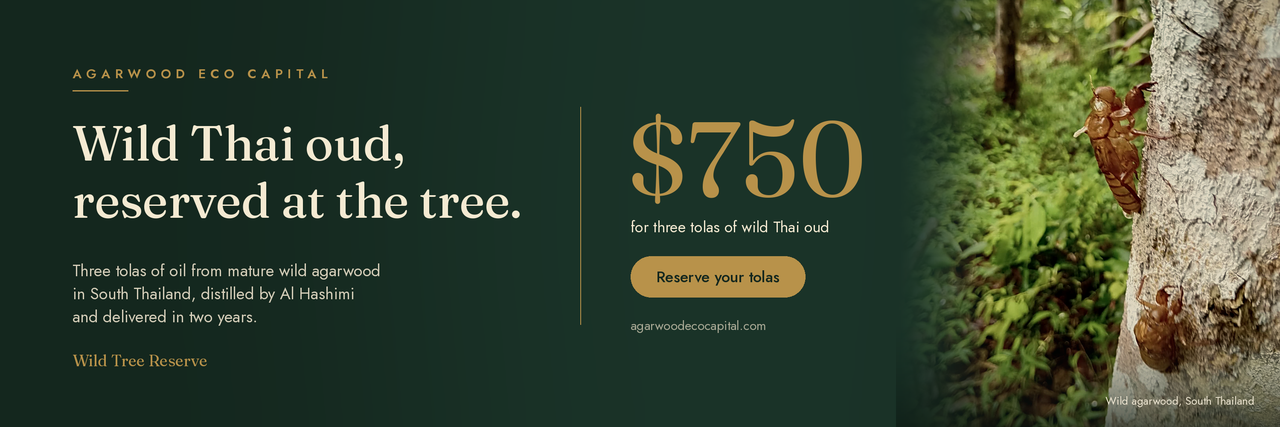
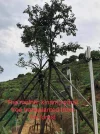
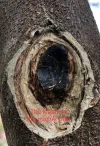
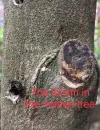
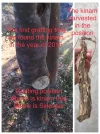
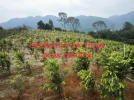
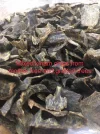
At the beginning, we transplanted the wild kinam (kyara) tree from forest, we are wondering if the wild kinam tree would change to the normal Sinensis tree, and the kinam already in the kinam tree would disappear by itself. Cause our planting place don't have the same environment with the original wild forest(such as the fungus, or some other factors we don't know can affect the tree). After some years, the kinam getting more in the infected place, it make us excited. Then we start to plant the trees from the seeds. It took years for us to grow up the trees from seeds and test if they are real kinam trees, the result disappoint us, it is totally Sinensis, can not get any kinam only agarwood. After that, we graft the branch of the kinam tree on the Sinensis trees, after 4 years, in the year of 2016, we success to get the kinam from one of the grafting trees, it is very exciting, amazing, after that we do some more test and get confident that this way is workable. Please see the attached picture, it is the first grafting tree we found the kinam in it, the picture took in the year of 2016.


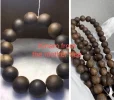
Regarding the cultivated kyara (kinam) from eBay, we supposed no one would buy the cultivated kinam from eBay, cause lots of agarwood be tagged as kinam but they are not the same things, we do go oversea to purchase agarwood and the kinam material from the year of 2012, such as Singapore, Dubai, Bahrain, Malaysia, Indonesia and Japan, Japan mainly for Kinam, make the beads and carving for our local market. For now, the cultivated kyara we are mainly selling in our local market, customers use the electronic incense burner to heat for fragrance, some customer soak it into wine for months to drink, some customer cook it in the water and drink with tea. For now, the cultivated kinam is still rare, but certainly no more rare in the near future.


Regarding the aroma of the cultivated kyara (kinam), the aroma is not as strong as the wild kinam, also not that deep or complex, I think for the cultivated kyara, if we don't overfeed the trees, after some tens years or hundred, the aroma of the cultivated kinam maybe can reach the wild kinam. But we are not possible to get any of it for now. Maybe in the future, we can test the cultivated kinam infected 10years, 20years and so on, then we can learn more.

 
I come from Bordeaux and even if I don't drink wine, I know that grafting plays a bigger role than getting a new plant without seeds my friend lol !

Resination is a defensive reaction from a stress.

Grafting a resinated branch won't garantee you the infection of the tree.

The tree needs the reason of the stress to make him react.

In the case exposed : grafting would be useful if you assume that a tree that bears Kynam inside is genetically modified from roots to leaves ...

I'm not a kyara expert but I doubt this happens.

If this happens : you need to be sure that the grafting will modify genetically all
the tree so it has to be CGMS tested.

People reactions is that the smell of cultivated Kynam isn't equal to real kynam.

Then we have to ask ourselves does a graft can replace decades and decades resination from natural infection ?

I just say that because of all of these, I'm very doubtful ...


Regarding the grafting, please see my previous replies.

Regarding " whether graft can replace decades and decades the resination from natural infection", we heard some stories from the wild agarwood hunters, some stories happened in Hongkong (start from the year of 2003), as we know, Hongkong is a small area, and not too much forest, the strange thing is that sometimes one agarwood tree can get lots of high quality agarwood, some agarwood trees are big but rather few agarwood, even they are nearby. In the 1990's, in Indonesia, some hunters went to hunt the wild pigs in the jungle, happen to find a big gaharu tree in the jungle, they get hundreds kilograms high quality gaharu from that tree. Also in the year of 2015, in the mountain of Kinabalu in Malaysia, one gaharu tree get some tens kilograms high quality gaharu. Also some stories for the kyara in Vietnam, one kinam trees can get some ten kilograms high quality kinam. One tree can get so many high quality agarwood, why the high quality agarwood still rare? What happen to this kind of trees? Special fungus infect them? If the reason is the special fungus, why some agarwood trees nearby not be infected? Unfortunately, for the high quality agarwood with big quantity in one tree, no any hunter keep the branch and success to graft, if the graft can copy the resin process from infection in the mother wild tree, it would be a huge lost for the agarwood industry and humans.

I agree with this also I got some nice quantity of high quality gaharu and kynam and it's still always found.

I'm just not sure about grafting a sick branch to a cultivated tree and hoping it become Kynam.

I'm not saying you're lying or what, my brain is just curious Id be happy to see the process.

True about Hong Kong and even if I have my own network out there I don't know all but I know the area is small.

As for Limushan in Hainan, it looks that the forest is dry also since a long time according to the last updates I received ...
 
Obviously, living in Oregon, I have no specific knowledge about the reality of kyara or kinam. But I do know a good amount about plant physiology and genetics. It’s kind of my specialty.

If the essence of these woods is a specific infection by a specific fungus, then grafting might be unreliable unless fungal inoculation went along with it.

But if the essence of these woods is due to the genetics of the tree itself, then it all falls into line.

Grafting will not genetically modify the entire tree. After you graft you end up with what’s called a genetic chimera. One set of genes active in the roots, another set of genes active in the graft. This does not cause any kind of problem. The graft will stay true to its type, as will the roots. The reasons someone would graft are numerous. One reason is to avoid the hassles of seed stratification in germination, Another is that you start further along in the path of development, also the roots of a different species might grow better in the geographic area where you have your plantation, but most importantly I think it allows you to control the specific genes that are growing on your specific plants. When you harvest seeds all kinds of genetic recombination is going to happen since those seeds are produced by sexual reproduction. No two of them will be the same. Each time you plan a seed it’s a roll of the dice! So if in fact you found a living tree that contains something that resembles the fragrance you were looking for, the most reliable way to get a plantation with those same traits is to graft branches or perhaps force roots off of the branches using rooting hormone of that very same exact individual tree that has the fragrance that you want.

Now if it turns out that kyara and kinam only form in roots (i’m no expert but this is the first time I’ve heard anyone say that, for what it’s worth) then I don’t see what the point of grafting would be.

Thank you very much for your professional analysis. I learned something about the graft from plant physiology and genetics.

Regarding the kinam graft, please see me precious replies.
 
Absolutely. In the US french grapes have some kind of rot that affects the roots. I don’t recall the details but I think they graft French shoots onto native US roots - for some reason I have a memory it might be Concord grapes? But definitely to enable it to grow where disease would prevent it!

how exciting that people have been able to cultivate something that smells a little bit like kyara though! I’ve smelled some cultivated stuff and while it wouldn’t substitute for actual kyara in any way, I think it has a nice Vietnamese / Chinese oud vibe that in itself, regardless of kyara, is lovely. It’s funny because in all this comparing it to kyara one might miss it’s unique beauty. Like Aussie sandalwood. If all you do is think of it as a substitute for real mysore, you will never enjoy it fully.

Regarding "Like Aussie sandalwood. If all you do is think of it as a substitute for real mysore, you will never enjoy it fully", rather good example.
 
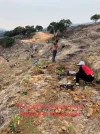
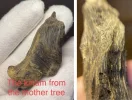
Below are pictures for the mother kyara (kinam) tree transplanted from the forest, we open to check the kinam in the tree, infected by hack.
 

Attachments

  • [Ouddict.com] Cultivated Aquilaria Sinensis
    1.webp
    162.4 KB · Views: 533
  • [Ouddict.com] Cultivated Aquilaria Sinensis
    7.webp
    217.5 KB · Views: 507
  • [Ouddict.com] Cultivated Aquilaria Sinensis
    8.webp
    204 KB · Views: 522
I agree with this also I got some nice quantity of high quality gaharu and kynam and it's still always found.

I'm just not sure about grafting a sick branch to a cultivated tree and hoping it become Kynam.

I'm not saying you're lying or what, my brain is just curious Id be happy to see the process.

True about Hong Kong and even if I have my own network out there I don't know all but I know the area is small.

As for Limushan in Hainan, it looks that the forest is dry also since a long time according to the last updates I received ...

What country are you in?

For now, Hong Kong and Hainan is hard to get high quality agarwood already, but it doesn't mean totally don't have, cause no one can guarantee what happen in the forest. When the hunters go to forest to hunt the agarwood, if they can not survive by hunting agarwood, they will quit. More and more hunters quit, but still have few do.

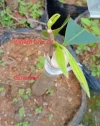
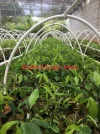
Regarding the grafting, please see the attached pictures.
 

Attachments

  • [Ouddict.com] Cultivated Aquilaria Sinensis
    2.webp
    215.8 KB · Views: 524
  • [Ouddict.com] Cultivated Aquilaria Sinensis
    3.webp
    94.1 KB · Views: 518
  • [Ouddict.com] Cultivated Aquilaria Sinensis
    5.webp
    142.2 KB · Views: 499
  • [Ouddict.com] Cultivated Aquilaria Sinensis
    4.webp
    250.3 KB · Views: 503
  • [Ouddict.com] Cultivated Aquilaria Sinensis
    6.webp
    166.2 KB · Views: 503
  • [Ouddict.com] Cultivated Aquilaria Sinensis
    10.webp
    207 KB · Views: 469
Hi tony is this Kevin’s plantation?

This is our own plantation, located in dongguan city, near Hongkong and Shenzhen. I am the one who can speak English in our company so far. People who interested in cultivated kinam are welcome to visit our plantation, it is worth to check it by yourself, it is really amazing for the agarwood industry.

By the way, who is Kevin? Where is his plantation?
 
His plantation is in Hainan, he sells cultivated kinam and is well known

I don’t known him, as far as I know, for the agarwood plantation in China, rather few person speak English.

For now, Hainan is not the place can harvest the cultivated kinam, the grafting trees there are too small, since at the beginning, the agarwood plantation in hainan, they doubt the grafting kinam trees are workable.

What platform is he selling? In EBay? He is probably the first one who selling cultivated kinam oversea? He is doing great. I think should be lots of people doubt of him oversea at the beginning. Cause at the very beginning, everyone in China the first time heard, doubt of it, some check the grafting trees still doubt if the kinam be inlaid in the grafting trees.

The price for the cultivated kinam is still high in China market, cause comparing with wild kinam 1k usd per gram, the customers are willing to pay the cultivated kinam at high price. But according to our experience in agarwood industry, it is not worth to buy the cultivated kinam at so high price for stock, prefer to stock some high quality wild agarwood. If buy for samples, that is ok.

Actually, I came here to check some the technologies of oud distillation in ouddict.com in this several days, this place is good, I get some useful information for oud distillation and make some friends. And found this topic.
 
Great!
View attachment 11742About 7 grams cultivated green kinam View attachment 11742

Looks good, did you buy it from Kevin? How do you think of the 7 gram cultivated green kinam?

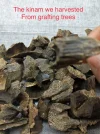
I attached some of our kinam harvested from our plantation, it is sinking level, most of them are from the mother tree, rather rare for now. For the small chips, some of them from the grafted trees.
 

Attachments

  • [Ouddict.com] Cultivated Aquilaria Sinensis
    11.webp
    201.8 KB · Views: 495
  • [Ouddict.com] Cultivated Aquilaria Sinensis
    12.webp
    135.2 KB · Views: 502
  • [Ouddict.com] Cultivated Aquilaria Sinensis
    13.webp
    215.2 KB · Views: 468
What country are you in?

I'm from France Tony.

Because I all see is sappling grafted with a branch that may come from an older one to strengthen the sappling and allowing it a bigger change to survive during its growth and kynam mother tree drilled on its side.

The hunters if they get caught, there go to jail.

And there are hunters because they don't have the money to invest into plantations.

Mostly they spot a tree and they practice "Huozhuan" on a selected tree and they spot it with so they know where to come back to hope it got infected and cut what they can cut and run very fast before police comes.

All of this leads me to this question : what is Kynam according to you ?
 
Last edited:
You're right they are more around Huizhou ...

Yes, you are right, the mother Kyara (kinam) tree is from the forest of Huizhou, at the very beginning, the agarwood hunters hunted some high quality wild green kinam in a mountain of Huizhou city, Guangdong province. After the news spread in the hunters, more and more hunters went to the mountain to hunt kinam, some of the hunters found a small tree with kinam in it, but kinam is too less, since the tree is too young, they start to transplant the young kinam tree back to home to plant and then resell the tree. After this, the mountain in huizhou got a new name "Kinam mountain" in agarwood industry.
 
Anyway brother Tony I will stop answering in this conversation as I don't get the thing about this cultivated Kynam stuff.

I get good feedbacks from people according its smell tho and I think that it's a good cheap alternative for people.

As for your investment, as you seem to have invested : take all your time and when your trees are ready : NEVER NEVER follow the advice of people who will encourage you to inject the trees with microbial infection as cheaper alternative because it can affect the oil chemical tests and you will see many big doors closed.

I wish you all the best and if you want a good teacher for distillation, I can advise you @Al Shareef Oudh.

He even recently gave me help with my last project on a very specific and critical aspect :Thumbsup:.
 
Back
Top