This is @AbuTominaga but I'm replying from this account.

Your Analytical Methodology and SOP are good, but as you mentioned, age and time can't be bought or simulated. You can simulate it with some variables like oxidation but it won't reflect the real aging. As aging can also be without oxygen exposure and it will indeed have an effect. This is only one of the challenging variables and there are many!

So, you're a professional researcher who's fascinated by the world of oud, and one of your main goals personally and professionally is to crack the Oud matrix code... And luckily, you seem to have a proper allocated budget for this research.

In a nutshell that is shared publicly and openly; any endeavor by any major company to synthesize Oud, should never consider wild Oud oils. Your best shot is with Plantation Oud...and even Plantation oils, you'll never have an identical scent/character/soul of a traditional or artisanal Oud oil. Oud is not Rose. Rose is easily synthesized. But Oud? Totally different ball game.

You're welcome to request a consultancy service session if you need further details and information! However, most of us Oud Lovers, we do not like the idea of synthesizing Oud nor encourage it. In a world where everything is copied, Oud has a community that appreciates it for IT. For being this divine substance that is rare, mysterious, soul stirring scent...

In a world where almost everything of true value is degrading (values, principles, art, design, taste), Oud became our haven and sanctuary. It's not a mere scent that we "use". It's an anchor and refuge.

For all of the above, while I understand that not everyone would share this sentiment, but personally and as @The Oud Lab, we're very conservative when it comes to such topics (synthesizing Oud).
I absolutely agree wholeheartedly as I do not believe any synthetic compound designed to mimic a natural scent truly approximates nature. I suspected that this was the underlying purpose of the project, I was simply a contractor conducting a "blind study" for a few years under an agreement. This is my opinion deduced from the myriad of data obtained, I am not giving approval to the project, just providing my professional services to the client.

Repeat: I agree with You 100%!
 
Hi @LasLunas, could you please clarify what you're exactly up to? I may not be the right person to address anything off-topic than what was intended for this thread. I am not sure what are you reffering to by saying....
"Out of 73 samples, each run with three different eluting solvents, same temp ramps and column, same calibration and internal standards a good number were adulterated, one sample with ~23% DEHP (Diethyl hexyl phthalate).

I am mostly interested in the GC/MC-OPLS-DA of the same samples post aging periods and/or conditions. The inherent issues include running a sample shortly after being put up, then again in 5 years or 10 years, 20 years and 30 years. Equipment advances, data manipulation, etc., introduce uncertainty as well. The design of trials is fraught with variables, but nothing is insurmountable." Is this discussed somewhere in a different thread?
 
Certainly.
I completed a contract for a client a couple years ago. My role was to analyze a number of "Oudh Oil" samples provided by client, all were identified by character sequences so basically blind to me and the team I assembled.
Again, I suspected that the client goal was to replicate some "generic" type out oil, but I do not attest to this.

So during the runs and data assimilation excessive heterogeneity was observed, thus OPLS-DA applied to data.
Most of my lifetime I have utilized herbal medicine and essential oils for pleasure and health, but never Oud Oils.
Started to browse the literature and vendors, purchased some from various vendors, made significant headway understanding the various starting materials, etc.
To make a long story short, I enjoyed some of the oils and others not so much, or almost disposed of but saved for experiments.

Numerous subjective opinions on the distillation, collection, storage parameters intrigued me and when searching for validated data reached a dead end as it is/was not available. I reviewed data collected and assimilated during the project for my personal thought process, an attempt to correlate to statements/opinions made by vendors and users of Oudh oils alike.
Plenty of opinions on storage and aging, a bit of scientific information, but not the validated data I am hoping to review, constant generalizations and lack of recent analyses of Oudh in various stages of aging. Inherent difficulties probably prevent a valid study of an Oudh oil over a lifetime of storage and aging. The precious nature of wild sourced raw materials hinders suitable samples for study, however with cultivation and inoculation farms running full scale operations the possibility to obtain samples for such studies may exist, not sure.

My comment concerning adulterated sampled was just that, no hidden meaning. Some of the samples analyzed were found to contain synthetic diluents, specific plasticizers mentioned for health concerns to anyone curious enough to check it out.

So I am up to seeking knowledge for myself, nothing more, nothing less.
I was asking if any of the technically versed had thoughts or comments as to how trials to determine reactions during filling, storage and aging might be best devised as it is worth exploration.

So in a nutshell, purely seeking truth.
I feel like it's good that you two have connected! because it felt a while back like @Oudh Analytics was trying to drum up similar conversations but not finding someone here who could engage at that sophisticated level so things kind of petered out. A real opportunity to do some great service for the general state of oud lore, should such project be completed and shared with the public!
 
I feel like it's good that you two have connected! because it felt a while back like @Oudh Analytics was trying to drum up similar conversations but not finding someone here who could engage at that sophisticated level so things kind of petered out. A real opportunity to do some great service for the general state of oud lore, should such project be completed and shared with the public!
Thank you again for the direction in the pursuit of information.
I feel like it's good that you two have connected! because it felt a while back like @Oudh Analytics was trying to drum up similar conversations but not finding someone here who could engage at that sophisticated level so things kind of petered out. A real opportunity to do some great service for the general state of oud lore, should such project be completed and shared with the public!
Absolutely, unfortunately the thought comes on the heels of very little wild sourced woods to be procured moving forward. However the potential future availability of cultivated woods may facilitate such a study as economics play a large role in sample donation.
 
I feel like it's good that you two have connected! because it felt a while back like @Oudh Analytics was trying to drum up similar conversations but not finding someone here who could engage at that sophisticated level so things kind of petered out. A real opportunity to do some great service for the general state of oud lore, should such project be completed and shared with the public!
@Oudh Analytics is the real deal. Very responsive and an actual research scientist.
I had some GCMS/FTIR work I did for some members here last year and wanted to extend into TGA-FTIR. I would really like to collab with him and send out a bunch of oils for characterization. I simply do not have the full day to decant, pack, label and send out 50 oils. His sample size requirements, while understandably large, make it extremely expensive for certain oils.

I am keen to see what’s common among great oils, and how adulterated some might be. I realize beyond the thousands of dollars in oil, it’s a huge commitment on time.
Precisely, cost would hinder or stall such a project. I always dream in the perfect world of "what if I could...."
I suppose it isn't reasonable, but it has worked for me so far!
 
I feel like it's good that you two have connected! because it felt a while back like @Oudh Analytics was trying to drum up similar conversations but not finding someone here who could engage at that sophisticated level so things kind of petered out. A real opportunity to do some great service for the general state of oud lore, should such project be completed and shared with the public!
Fantastic idea!
 
Oh, this is an excellent response to the post. I need to find some time on hand to address each of your point and what can we do or can not do in practice. In short, we are aiming for as many goals as you mentioned. I know it is monumental task with a long-time target. Lets help each other on the path.
Sounds Awesome!
 
For this project to be an absolute success, one might ask about your GCMS database.
To do this in the perfect way, you'll have to define new elements that your dB might not have, based on trustworthy samples from various regions. Even when this is done, wouldn't it be the case that you'd still have unidentified elements?

Another factor here is defining quality. What is Quality of an oud oil? Percentage of sesquiterpenes? Agarosol? The first step of course would be to rule out any synthetic dilutants. What's the next step in defining quality?

The exercise would be beneficial if the goal is to establish a more common way of communication between commercial distilleries and fragrance houses to communicate a certain aspect of the scent. Same as with Rose... Percentage of citronellol and geraniol etc.

Other than that, you might identify certain elements that are more available in high grade artisanal distillations. Would this mean that if this element is more available in an oil that the scent is ALWAYS better? Not necessarily! As there are a myriad of others compounds and elements in that oil that would determine how the end scent would smell like.

Another thing.
Most people think that German cars are of a "higher" quality than most. However, in the automotive industry, Toyota is known to be the king. Luxury and quality are not the same thing.
In the same sense, as a perfumer, you do want something beautiful and applicable to your vision. And for a fragrance house, that doesn't always mean a 400$ a gram of an agarwood oil.

Moreover,
What about GCMSing aged oils? The project would be phenomenal if you'd be able to GCMS an oil after it's cured, and then do it again after 10 or 20 years. This "might" unravel some new info.
Even testing when fresh, at 6 months, and 1 year might be informative I think especially with plantation materials.
 
I have often thought about this many times. If I purchased a nice red wine I will find some where on the label what has gone into it, which is fair. If I buy some food, same thing. But when I buy a 3gm bottle of Oud for hundreds of €s....it's all about trust.
I guess I don't trust the food or wine industry as much as the Oud sector.
But of course, I have found out the expensive way as I am sure many on here at some time or other. Which is why I stick to the vendors I know here or the people here who may have experiences with others, which I have not.
💯 Absolutely....
 
For me the fact that it is for external use makes the obscurity tolerable.

Honestly up until recently I just assumed every single (literally) agarwood oil was in some way cut, diluted, bouquetted, stretched.
 
For me the fact that it is for external use makes the obscurity tolerable.

Honestly up until recently I just assumed every single (literally) agarwood oil was in some way cut, diluted, bouquetted, stretched.
Reasonable and prudent assumption, but I still can't stop myself from smelling and then tasting prior to skin application.
 
What an excellent conversation going on! I was so busy over the last few days that I couldn't engage here on a full scale. Just submitted a funding application titled,"Towards Global Acceptance: A Novel Grading Strategy for Bangladeshi Artisanal Agarwood Oil Based on Market-Driven Olfactory-Chemical Fingerprint Profiling". However, I am not entirely sure if I will receive the funding, as one of the funding conditions is that the bulk of the work must be done in a local lab in Bangladesh. And what a coincidence that a dormant topic becomes alive again. Thanks to @Ahmaoud for directing @LasLunas on this thread to @Mr.P for anchoring the conversation in the right direction. It's great to know that @Loulikesoud is still keen to move the project forward. As you all understand, the main bottleneck is the cost of the samples and the time required to move the idea forward. External funding is crucial for sustaining energy and engagement in the long term. Therefore, to secure competitively significant external funding, the recently published work is needed. May I set up a Google Drive file link for @Loulikesoud and @LasLunas to share your works in this aspect to see if we can publish something significant from a common ground?
 
What an excellent conversation going on! I was so busy over the last few days that I couldn't engage here on a full scale. Just submitted a funding application titled,"Towards Global Acceptance: A Novel Grading Strategy for Bangladeshi Artisanal Agarwood Oil Based on Market-Driven Olfactory-Chemical Fingerprint Profiling". However, I am not entirely sure if I will receive the funding, as one of the funding conditions is that the bulk of the work must be done in a local lab in Bangladesh. And what a coincidence that a dormant topic becomes alive again. Thanks to @Ahmaoud for directing @LasLunas on this thread to @Mr.P for anchoring the conversation in the right direction. It's great to know that @Loulikesoud is still keen to move the project forward. As you all understand, the main bottleneck is the cost of the samples and the time required to move the idea forward. External funding is crucial for sustaining energy and engagement in the long term. Therefore, to secure competitively significant external funding, the recently published work is needed. May I set up a Google Drive file link for @Loulikesoud and @LasLunas to share your works in this aspect to see if we can publish something significant from a common ground?
I support the project 100%. I do not own the data, the client owns all of it. I will check in with appropriate authority for the client on Tuesday Morning, EST, and report back to you immediately. The exploration of this project is stimulating.
 
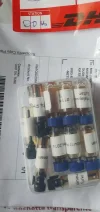
What a coincidence! Today, some nineteen free samples arrived from various places in Indonesia. Thanks @YusaAromatics, for your kind advice on shipping.
[Ouddict.com] FREE GCMS analysis report for the Ouddict community!
 
What an excellent conversation going on! I was so busy over the last few days that I couldn't engage here on a full scale. Just submitted a funding application titled,"Towards Global Acceptance: A Novel Grading Strategy for Bangladeshi Artisanal Agarwood Oil Based on Market-Driven Olfactory-Chemical Fingerprint Profiling". However, I am not entirely sure if I will receive the funding, as one of the funding conditions is that the bulk of the work must be done in a local lab in Bangladesh. And what a coincidence that a dormant topic becomes alive again. Thanks to @Ahmaoud for directing @LasLunas on this thread to @Mr.P for anchoring the conversation in the right direction. It's great to know that @Loulikesoud is still keen to move the project forward. As you all understand, the main bottleneck is the cost of the samples and the time required to move the idea forward. External funding is crucial for sustaining energy and engagement in the long term. Therefore, to secure competitively significant external funding, the recently published work is needed. May I set up a Google Drive file link for @Loulikesoud and @LasLunas to share your works in this aspect to see if we can publish something significant from a common ground?
Publication with data that may be useful as background for grant proposal
 

Attachments

Top