
Is there currently a standard or understanding in place? My limited understanding at this moment is vendors on Ouddict have been vetted and do not engage in extending or adulterating oils. The world of commerce is huge and full of those who slake their greed.
While I agree with you 100%, I do not know what is acceptable to buyers; such as 95% Oudh oil = Yes, but 82% = No; or is Oudh Oil to be 100% pure? I am trying to understand where the "Bright Line" might be in this arena.
I know the idea is that everyone here is selling pure stuff to the best of their ability. Everybody is subject to the same "fog of marketing" unless they are selling their own distillations, so there is always some inherent uncertainty and I assume that we all kind of understand and accept that.

A former resident artisan here was a big advocate of across-the-board GCMS testing of all oud, but there was no consensus on this because of the difficulty and cost of getting an expert analysis and the difficulty of interpreting raw retention time data or whatever it is. I also believe the cost is a factor for a small artisan vendors and the incentive to sink money into this when there is already adequate demand is pretty low I imagine.
 
Mukhallat (مخلط) comes from the root word khalata (خلط) which means means to mix, mingle, blend, meddle, interfer, confuse, fuse, merge etc.

So a Mukhallat is just a mixture or blend.

So if it's a 'Oud Mukhallat' this can be understood in 2 ways:

1:
A mixture of different oud oils only.
This must be pure oud oils of course. So this Oud Mukhallat must be pure and unadulterated oud.

2:
A mixture of oud and other aromatic ingrediants. This would not be pure oud. But it's still technically a 'Oud Mukhallat' by definition. Because it's just a 'Oud Mixture'.

This grey area and [overlap of definition] is where confusion and misconception is born.

so always ask to clarify if in doubt.

If it's said: Mukhallat as opposed to oud Mukhallat then that simply means a mixture.
So it could be anything blended for aromatic use.

Of course the proportion of blend is a secret to the vendor and they likely cannot disclose that, so you have to be aware of that at the same time.
 
Do not let fear of the people or the aftermath prevent you from disclosing the truth because that is an obligation, as it pertains to the rights of the people (specifically the consumers) held. An obligation held not only over the knower of the truth but those who have that power to withhold the truth.

Advice.

This doesn't undermine the care and gentleness required in 'how' to disclose this info.

I certainly envy neither the beloved admin or the dear brother who found this stuff out. Tough morsel on your fork huh haha.
I do feel like it's pretty important that it gets shared because the balance of the equation has always been tipped very much against the consumers, with vast numbers of people basically being educated on marketing copy (and TikTok and YouTube videos and so on). It would be nice to see the pendulum swing the other way!
 
Extensive amount of data required to set up for determination of identification of constituents in this type of array. Fortunately Oudh Analytics has vast, accurate data and experience to interpret analytical results. No small task!
I do not know how much poetic license is granted to the artisans producing Oudh oils, but if one is using vetiver or other essential oils to "round out" or balance a composition is declaration desired? or is this proprietary info? However using endocrine disruptors such as phthalates is never to be tolerated and vendors, including resellers need to be called out on this forum.
Although I usually do not respond to appreciation of personal qualities, appreciation of hard work boosts the energy for the task ahead! :praying:
 
Is there currently a standard or understanding in place? My limited understanding at this moment is vendors on Ouddict have been vetted and do not engage in extending or adulterating oils. The world of commerce is huge and full of those who slake their greed.
While I agree with you 100%, I do not know what is acceptable to buyers; such as 95% Oudh oil = Yes, but 82% = No; or is Oudh Oil to be 100% pure? I am trying to understand where the "Bright Line" might be in this arena.
shall we soon see the rise of Extrait de Oud? 🙂
 
Last edited:
Do not let fear of the people or the aftermath prevent you from disclosing the truth because that is an obligation, as it pertains to the rights of the people (specifically the consumers) held. An obligation held not only over the knower of the truth but those who have that power to withhold the truth.

Advice.

This doesn't undermine the care and gentleness required in 'how' to disclose this info.

I certainly envy neither the beloved admin or the dear brother who found this stuff out. Tough morsel on your fork huh haha.
Thanks for being so nicely balanced, feedback, based on the assumption that I was talking about simply the "Mukhallat" kind of incident. As I understand it, most of those in the high-street Oudh market are a kind of Mukhallat, whether they declare it to the customer or not. I am not so bothered about this trade norm now, and can do nothing about it. When I have asked business owners and salespeople, they say that customers of the market are accustomed to this type of Mukhallat and believe only those scent profiles are pure. If a salesman puts pure stuff on the shelf, the returned customer senses the pure one is not quite right, as he was familiar with it, and in such a situation, that pure stuff does not get sold in the same quantities and price as Oudh Mukhallat. So, this is a vicious circle. Unless a mechanism and an education campaign are in place, nothing will change for a generation or so. Yes, I become upset when I see how easily customers become fooled by trade tricks without being aware of the overpriced items. But here, I am more concerned about adding an alarmingly high amount of synthetic adulterants that are hazardous to health. And more frustratingly, on my watch and yet we can do nothing about it as a community against such mafia!
 
shall we soon see the rise of Extrait de Oud? 🙂

View attachment 49109
@Saudalhajri, I am back with some more info here, as to why I suspected it to be vetiver. Please see the data curve here. It more closely matches the Haitian variety of vetiver than the traditional Thai oil. I respect your emotional attachment to it. But I am a bit cruel here, only to be kind. You still have a chance to do a GC-MS test (we can do it with a fee), but as it does not support our causes in any way, we would not do it for free, unfortunately.

Just as a footnote, when we launched our free GCMS project, we had a few objectives to meet. First, with GC-MS and GC-O-MS, agarwood oil species, regional signature, and quality detections. Secondly, compare the result of GC-MS with my Spectroscopic method for adulteration, species, and quality detection. As we have not received enough responses from the community, we were unable to meet most of our target yet with satisfactory data, except for one. We were able to compare adulteration detection with GC-MS and with my spectroscopic method at a level of 5%. Let me break down what the 5% level means. Obviously, GC-MS is a thousand times powerful tool than any spectroscopic tools for sensitivity, while for selectivity, spectroscopy is as good as GC-MS or even better in some cases. So, our target was to see how much lower we could detect adulteration compared with GC-MS. We concluded that GC-MS can go as low as 0.001% easily for both synthetic and natural adulteration. The limit for spectroscopy is down to 1% for the most common synthetic adulterations, while for unknown synthetic adulterations, it is about 2%. For natural adulteration, spectroscopy is good at a level of 3%. As we do not know yet how many difficult synthetic or natural adulterants are out there, I can presume from my experience so far that if anything suspicious at a level of 5% or higher, it is detectable with spectroscopic methods with ease. Fortunately for my case, when a trader does add any types of adulteration to increase the volume, they go for over ten percent at least. What I can not detect with confidence is whether a clever trader infuses some nice essence at a trace level. But most greedy traders out there do adulteration to increase volume rather than increase essence dimensions and intensity. So, I also have a long way to go in the race, and indeed, your support is crucial to achieving the goal!
Some of the Universities in New England will allow individuals to run a sample in a GC/MS for about $250 an hour. I had to laugh....no one will select the correct column for you, do you want a 30m x 0.25mm x 0.25um dimethyl polysiloxane phase or a phenol methyl siloxane phase? Who will assist with sample prep? Do you have supplies?
How will you prep and filter sample? What is correct sample volume for injection? I assume everyone will select Helium as carrier gas at 1 ml/min. What is inlet temp? 250⁰C ? Or do you have another idea?
Temperature ramp programming is critical. What if using a 60 m capillary column instead of a 30m? When do you schedule holds and for how long in the Temperature ramping? Detector Temperature? 300⁰C or ??
Temperature of the ion source for the MS? 70ev electrons scanning over 50 - 500 m/z or??? Running in electron ionization mode???
The above is the easy part. Who will prepare ( and pay for) the standards for calibration ? External standards, internal standards to calculate any injection volume discrepancies or instrument response. Criteria for standards...similar to analyze but Not present in sample itself. Which software? NIST SEARCHER #xxx and which NIST database? #17 or??

Point: This forum is quite fortunate to have members with such knowledge and willing to share. Advertisements for "come use our GC/MS" might be misleading as the operator and his data analysis require copious amounts of knowledge.
I do not typically glorify scientists either, but I am willing to give a big shout out loud to anyone who dedicates himself/ herself to sharing such work.
I am amazed at the depth of sharing on this forum. Just wonderful!
 
Actually I was just clarifying the misconception around mukhallats as I saw it mentioned earlier somewhere.

When you say hazardous to the health is it prohibited chemicals or things that are not supposed to be applied on the skin or what type of stuff are you talking here?

Many high street synthetic attars are made with who knows what inside, and I always feel like they are not good for the health either. And the govt regulation around perfume oils that are applied on the skin is grey I suppose.
Would love to hear your insights on these things bro. Sort of like Nitromusks that got banned due to health detriment.

Sometimes you can find a loose oil and you'll have no idea what is inside it you know?
At least have a sample checked for phthalates, a serious endocrine disruptor with detrimental physical effects for men in particular.
I have found Oudh oils adulterated with up to 23% total w/v Di-(ethylhexyl) phthalate, also known as DEHP or DOP (cas# 117-81-7) in both the plastics and rubber industry. Viscous, clear extender, but far from harmless.
Regulations enacted to phase out DEHP from medical devices, storage bags and tubing by 2030. EU is ahead of USA with respect to phase out.
 
Actually I was just clarifying the misconception around mukhallats as I saw it mentioned earlier somewhere.

When you say hazardous to the health is it prohibited chemicals or things that are not supposed to be applied on the skin or what type of stuff are you talking here?

Many high street synthetic attars are made with who knows what inside, and I always feel like they are not good for the health either. And the govt regulation around perfume oils that are applied on the skin is grey I suppose.
Would love to hear your insights on these things bro. Sort of like Nitromusks that got banned due to health detriment.

Sometimes you can find a loose oil and you'll have no idea what is inside it you know?
At least have a sample checked for phthalates, a serious endocrine disruptor with detrimental physical effects for men in particular.
I have found Oudh oils adulterated with up to 23% total w/v Di-(ethylhexyl) phthalate, also know as DEHP or DOP in both the plastics and rubber industry.
Not to confuse DOP with n-DI octyl phthalate.
 
DOP the perennial oud bogeyman... who knows how much of this stuff we have been exposed to?
 
At least have a sample checked for phthalates, a serious endocrine disruptor with detrimental physical effects for men in particular.
I have found Oudh oils adulterated with up to 23% total w/v Di-(ethylhexyl) phthalate, also know as DEHP or DOP in both the plastics and rubber industry.
Not to confuse DOP with n-DI octyl phthalate.
Cas# 117-81-7
DOP the perennial oud bogeyman... who knows how much of this stuff we have been exposed to?
So true.....
 
Actually I was just clarifying the misconception around mukhallats as I saw it mentioned earlier somewhere.

When you say hazardous to the health is it prohibited chemicals or things that are not supposed to be applied on the skin or what type of stuff are you talking here?

Many high street synthetic attars are made with who knows what inside, and I always feel like they are not good for the health either. And the govt regulation around perfume oils that are applied on the skin is grey I suppose.
Would love to hear your insights on these things bro. Sort of like Nitromusks that got banned due to health detriment.

Sometimes you can find a loose oil and you'll have no idea what is inside it you know?
Agree, Hazardous to health, synthetic chemicals are a broad topic, and there are many grey areas both in regulatory and in each industry and region. Rather than talking about a single synthetic's permitted level and degree of allergens, or other health concerns, and so forth, of each chemical, here I am referring to selling a third or half a volume of a bottle with synthetic chemicals for an external use as an essential oil. It seems to be an offence to an individual who is not aware of it beforehand, let alone being cheated for paying a hefty amount for a cheap synthetic. Some people even take drugs or smoke whatever, and we can shrug it off as it is his/her choice. But here, this is not the case. Even as a chemist myself, opening some oudh vial near my nose gives me an immediate reaction if it has synthetics, and most of the synthetics, if exposed over a certain dose, give me a headache for a long time. And if a sensitive customer applies it regularly, believing it will improve mental health, while paying a large bill, will it not be selling such products without declaring it unethical in any social or business standard, even if we set aside regulatory or other paperwork clearance to commit such an act?
 
Agree, Hazardous to health, synthetic chemicals are a broad topic, and there are many grey areas both in regulatory and in each industry and region. Rather than talking about a single synthetic's permitted level and degree of allergens, or other health concerns, and so forth, of each chemical, here I am referring to selling a third or half a volume of a bottle with synthetic chemicals for an external use as an essential oil. It seems to be an offence to an individual who is not aware of it beforehand, let alone being cheated for paying a hefty amount for a cheap synthetic. Some people even take drugs or smoke whatever, and we can shrug it off as it is his/her choice. But here, this is not the case. Even as a chemist myself, opening some oudh vial near my nose gives me an immediate reaction if it has synthetics, and most of the synthetics, if exposed over a certain dose, give me a headache for a long time. And if a sensitive customer applies it regularly, believing it will improve mental health, while paying a large bill, will it not be selling such products without declaring it unethical in any social or business standard, even if we set aside regulatory or other paperwork clearance to commit such an act?
Agree 100%
 
Is there currently a standard or understanding in place? My limited understanding at this moment is vendors on Ouddict have been vetted and do not engage in extending or adulterating oils. The world of commerce is huge and full of those who slake their greed.
While I agree with you 100%, I do not know what is acceptable to buyers; such as 95% Oudh oil = Yes, but 82% = No; or is Oudh Oil to be 100% pure? I am trying to understand where the "Bright Line" might be in this arena.
I've also tested some big-name oud brands. Some of these vendors might not be driven by greed, as profits are sufficient to cover costs, but rather by a desire for a unique product. If all ouds were essentially the same, why would anyone pay a premium for them? Therefore, some vendors employ methods to alter the scent of their ouds.
 
Some of the Universities in New England will allow individuals to run a sample in a GC/MS for about $250 an hour. I had to laugh....no one will select the correct column for you, do you want a 30m x 0.25mm x 0.25um dimethyl polysiloxane phase or a phenol methyl siloxane phase? Who will assist with sample prep? Do you have supplies?
How will you prep and filter sample? What is correct sample volume for injection? I assume everyone will select Helium as carrier gas at 1 ml/min. What is inlet temp? 250⁰C ? Or do you have another idea?
Temperature ramp programming is critical. What if using a 60 m capillary column instead of a 30m? When do you schedule holds and for how long in the Temperature ramping? Detector Temperature? 300⁰C or ??
Temperature of the ion source for the MS? 70ev electrons scanning over 50 - 500 m/z or??? Running in electron ionization mode???
The above is the easy part. Who will prepare ( and pay for) the standards for calibration ? External standards, internal standards to calculate any injection volume discrepancies or instrument response. Criteria for standards...similar to analyze but Not present in sample itself. Which software? NIST SEARCHER #xxx and which NIST database? #17 or??

Point: This forum is quite fortunate to have members with such knowledge and willing to share. Advertisements for "come use our GC/MS" might be misleading as the operator and his data analysis require copious amounts of knowledge.
I do not typically glorify scientists either, but I am willing to give a big shout out loud to anyone who dedicates himself/ herself to sharing such work.
I am amazed at the depth of sharing on this forum. Just wonderful!
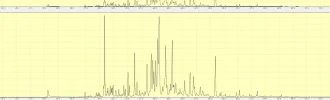
Find a professional Oud research team. They use the same machine and the same program to run thousands of Oud samples. If there is a problem, they can make a judgment based on the fingerprint of the key nodes. This is the GCMS when I bought Oud last time.
If sesquiterpenes are needed, headspace equipment can also be used for testing. This is the GCMS that the lab provided me with the OUD sample to help me quantify after I tested the OUD perfume.
I've seen a lot of adulterated oud, the most outrageous one was almost all phthalates. After I published the test results, the plantation owner was still trying to defend himself. Then when I told him the test results came from a certain team, he said the oil leaked when filtering the oud.
 

Attachments

  • [Ouddict.com] FREE GCMS analysis report for the Ouddict community!
    0.webp
    50.5 KB · Views: 97
  • [Ouddict.com] FREE GCMS analysis report for the Ouddict community!
    1.webp
    8.4 KB · Views: 109
Top