
Mr.P
oud<3er
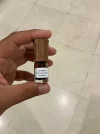
came upon a bottle of dilute l-muscone I made up a while back. This is a synthesized copy of the chemical that contributes the bulk of the body of the aroma to natural musk. Of course It doesn't remotely encapsulate the aroma of natural musk - instead it presents a highly refined narrow slice of the musk pie. Even if this is the dominant molecule that accounts for the main punch, it does not account for the rich broad complex array of notes that can only come from grains undergoing fermentation in a pod on a live deer.
I layered this with some patchoulol natural isolate, and at one point the two formed this really classic deep patchouli accord - it brought something into focus that I have smelled in the past but didn't realize exactly where it was coming from.
What is -fascinating- just from an educational point of view is to mix up something, check it out for a while, and then also try it with just a trace of the muscone. It's a funny material, transforming / exalting things without competing with them.
The pure muscone is surprising - when it is dilute (I am guessing at around the percentage that it's found in the grains) the connection to natural musk is clear. In higher concentrations it starts to resemble some of these artificial white musk / ambrettolide type scents. I don't know if this is an artifact of synthetic chemistry, or if it's just the nature of the molecule itself, and a natural isolate would be similar.
l-muscone and ambroxide are absurdly interesting molecules. i'm able to get a natural biotech/fermented ambroxide isolate, I wonder if this type of muscone will ever be a thing? for a number of reasons natural musk is not an option for me and I like these interesting alternatives… I love the botanical musks but the idea of a natural fermentation-made muscone is super appealing.
Last edited: