Sulaym - Hainan Sidr II

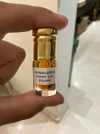
It has a nice golden color and medium viscosity. The smell is of pure honey šŸÆ, and tea šŸ«– with milk atop a honey-based wheat cereal. This reminds me of the middle-of-the-night trips to the kitchen where I would pour some Cheerios and add honey on top. It’s sweet, creamy, almost buttery, mild, with a nice floral touch, and is so beautiful to be emanating from an oud.
 

Attachments

  • [Ouddict.com] Oud of the Day
    IMG_3406.webp
    63.8 KB · Views: 0
Habzoud's Nagaland Sultan.

I might not get a second wear from my sample unless I can eke out another light dab... This is tremendous. Forget about ever saying I've smelt a tea note before. This is TEA. Starts of spicy and resinous and starts to dry down to beautiful tea, perhaps with a bit of pistachio or cashew milk.

EDIT: There is also a really delicate kumquat note over a kind of sandalwood-y butter that combined almost smells like sourpatch kids gummies.
 
Last edited:
Oudique - Merauke

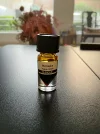
I love the dark, shiny, and silky presentation of the oud itself. There’s a sort of fermented sparkling wood note to Merauke. It’s kind of an acidic aroma that’s really addicting. It also reminds me of coffee grounds. It’s somewhere between the scent profile of Sarawak and Pontianak. It’s deep, rich, earthy, and woody. There’s also this sort of patchouli note to it. It’s creamy, and grassy. Beautiful stuff.
 

Attachments

  • [Ouddict.com] Oud of the Day
    IMG_3412.webp
    252 KB · Views: 0
Manzar Oudh Cambodi
This is great. It has a beautiful, inviting caramel-blonde colour. Right from the dipstick it pushes out vivid, tropical fruit notes of banana, mango and nectarine over an oudy base. It gives racy sour candy vibes, with ample sharpness to balance its sweetness. If I had tried this one blind, I probably would have placed it as North Thai. The quality is excellent for the price paid.

Manzar Oudh Silani
This is an odd one…smoky, slightly floral, dry-woody, with ester-y notes of pear drops. If I had smelled this blind, I would probably have guessed that it was a mukhallat/blended perfume of some kind. šŸ¤” I have several Sri Lankan woods and a small number of top-quality oils in my collection. This smells different to those. It doesn’t bear the hallmarks of Gyrinops walla as I have experienced it so far in my journey.

IMG_1540.webp
 
Wadima Oud - Fragrant Burmese

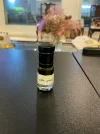
It’s a beautiful fragrant dried sweet raisin scent coupled with smoke and wood 🪵. Based atop a middle note of fresh leather. The dark berry šŸ‡ profile is amazing. It’s like wine šŸ· and corked wood. The smokey charred aroma is gorgeous. It’s such a comforting aroma akin to those accustomed to enjoying the flavor of Classic Coke over and over again. And want nothing changed. It’s perfect.
 

Attachments

  • [Ouddict.com] Oud of the Day
    IMG_3420.webp
    204 KB · Views: 0
Last edited:
I have been trying to put my finger on what bothers me about the kyarashrine green kinam distilled oil. I thought it was excellent at first, it still stands out as a quality oil especially for the price, but I could swear there's something of a mildew note that has emerged and today I was more convinced than ever that it's literally some kind of mildew. If I had to guess I would say the wood was not quite properly dried. I have no evidence for this other than my nose and comparisons to comparables
 
I have been trying to put my finger on what bothers me about the kyarashrine green kinam distilled oil. I thought it was excellent at first, it still stands out as a quality oil especially for the price, but I could swear there's something of a mildew note that has emerged and today I was more convinced than ever that it's literally some kind of mildew. If I had to guess I would say the wood was not quite properly dried. I have no evidence for this other than my nose and comparisons to comparables
Does the note remains unchanged during drydown?
Some sesquiterpenes could result in a similar scent, but like barn or jungle notes wont stay persistent during drydown.
 
Does the note remains unchanged during drydown?
Some sesquiterpenes could result in a similar scent, but like barn or jungle notes wont stay persistent during drydown.
Not sure what you mean by the note remain remaining unchanged... do you mean in terms of intensity or are you asking if the bouquet of the perfume itself changes with time?

I would have to say that the aroma of the oil goes through top, middle, and base phases and the specific mildew note is not especially persistent or ephemeral.

I think the question confuses me a little bit becauseI see a note as an element that rises and falls, but does not change in itself. What changes qualitatively is the bouquet resulting from all of the current tangible notes.

So the accord definitely changes over time, in part because the mildew note fades over time like other notes. I do not think of the mildew note as especially in the dry down but more in the middle of the envelope.
 
I have been trying to put my finger on what bothers me about the kyarashrine green kinam distilled oil. I thought it was excellent at first, it still stands out as a quality oil especially for the price, but I could swear there's something of a mildew note that has emerged and today I was more convinced than ever that it's literally some kind of mildew. If I had to guess I would say the wood was not quite properly dried. I have no evidence for this other than my nose and comparisons to comparables
My bottle must be from a different batch as I definitely don't have the mildew note. I've had it for close to 4yrs now and it has settled down quite a bit. I actually ended up giving it away to a friend as there was something about it that didn't sit well with me. It was overly sweet or something? Not sure. Anyway, I never wore it and the couple of times I added a little bit to blends I made, it seemed like it came through the strongest and I always focused on it's input rather than the other ingredients.
 
communication with the vendor has me pretty much certain it was the same oil if we are talking about what they sold as green kyara in 2023/2024 - they said it was a single batch same as the earlier releases.

I didn't notice this at all for the first year or so, it's only recently that I've I made the connection with the smell of mildew. To my nose it seems the oil itself has changed pretty dramaticallyas it has oxidized - developed a more woody / cedary quality that joined / replaced the initial sweet and almost minty aspect and I feel like some of this woodiness can feel adjacent to mildew. Interestingly, I feel like it's going through a second wave of change - i have been noticing some more rich aged oxidized facets I haven't noticed in the past. Really gives me hope for the quality of aged plantation oils.

I also think the way I perceive CK oils has changed due to perspective gained from sampling other samples so it's possible the oil has not changed that much and it's just my own perspective and associations.
 
prob have done this one before, but i had misplaced the bottle and only recently found it.

probably the biggest win from my 1688/reshipper experiment. a sinensis bantou.

guy def had opinions on the state of CN distilled oils and how 'ancient method' distilled was so prevalent to be just heavily diluted out with CO2 (not referring to distillers out of country, just the sad state of affairs in country and why much Ck smells the same), but this is something else

a fairly fluid oil, not thick, medium yellowy honey colored. top notes are earthy, very mildly camphorous over sinensis honeyed notes. i'm not great at descriptions as always. bit of a mind buzzy feature of it, really quite pleasant, cant stop smelling it. There are still notes of honey, but in the background rather than single note, and there's a lot going on here its hard to place the notes. maybe like a new sneaker ginger honey on top of sinensis incense burning sticks?

Unfortunately, it burns off into quite faint in maybe 2 hours, or i've just gone nose blind to it. Just a really enjoyable wear. as always, not award winning, can't compare $40/g with $400/g, but days like today, it's sometimes kinda compelling to think of ordering 10g of this vs 1g and remaining ignorant, because its enjoyment/dollar is quite high
 
Last edited:
I don’t know the oil but i had some CK chips from China. I threw them all away because i don’t know how the trees were treated and i really don’t want to smell any substances i have no clue what they are.
The CK scent was also pretty linear and boring to me as all my CK samples had a similar base note within.
I know that this post will not be helpful for the discussion but CK is a weird stuff in my opinion.
 
Sami HHK - had to grab and swipe this after all the CK talk above.

Can’t remember if this oil is made from cultivated or wild material - maybe someone else will remind me. It’s a codistill of Hainan and Hong Kong wood.

In any case, it leaves me smiling and shaking my head. Concentrated lemon-lime citrus, honey and flowers. Sharp, cooling, bitter and gently sweet all at once. One of the best Chinese oils I have.
 
I don’t know the oil but i had some CK chips from China. I threw them all away because i don’t know how the trees were treated and i really don’t want to smell any substances i have no clue what they are.
The CK scent was also pretty linear and boring to me as all my CK samples had a similar base note within.
I know that this post will not be helpful for the discussion but CK is a weird stuff in my opinion.
It's interesting seeing some of the reactions as this becomes more widespread and commonplace. You could probably find somebody who would appreciate the stuff that you're throwing out…

By coincidence I just got a small package today with a few samples of CK that another user no longer had any interest in. I agree that there's something different about this material on some level not the least of which is it is common place and pretty consistent… for example I am not anticipating any surprises because as you say there's a very narrow range of variation for the most part from specimen to specimen... and unlike other oud there's nothing rare about it, I have huge mason jars of the stuff, one of the nicest smelling ones I have was less than $.50 a gram, and it's hardly going to appeal to those seeking luxury!

But it has its own special charms as one of a spectrum of raw materials to use in creating fragrance and incense. CK is the one cultivated variety that does not require anything other than hot poker treatment to produce copious resin - that's one of the advantages of it. It's the other plantation material that concerns me because most of that is induced by injecting some kind of mixture into the tree which of course ends up in the oil on one level or another. Not everybody is open about what their "secret sauce" is but CK needs no sauce...
 
Last edited:
Ok didnt know this šŸ‘
I thought CK trees also get injected.
But still it gives me more headache than pleasure, so nothing for me anymore.
I would only go with wild chips and oils.
The rest is industry and not nature
 
Ok didnt know this šŸ‘
I thought CK trees also get injected.
But still it gives me more headache than pleasure, so nothing for me anymore.
I would only go with wild chips and oils.
The rest is industry and not nature
It's maybe worth pointing out that bantou is not inoculated, and not fire poked, just the result of physical damage. Fire eye is common hot poker inoculation, there's also insect damage, another natural non inoculation formation found, I'd be surprised if it varied that much from wild other than age and terroir (age being the obvious stark difference). With 50 million+ trees growing across several large regions, theres plenty of room for separating out differences.

I trialed something like 30 oils from 15 producers, and like 28 of em were just gradiants on the same bulk ck common smell. I can only imagine wood to fall along similar lines
 
Not sure what you mean by the note remain remaining unchanged... do you mean in terms of intensity or are you asking if the bouquet of the perfume itself changes with time?

I would have to say that the aroma of the oil goes through top, middle, and base phases and the specific mildew note is not especially persistent or ephemeral.

I think the question confuses me a little bit becauseI see a note as an element that rises and falls, but does not change in itself. What changes qualitatively is the bouquet resulting from all of the current tangible notes.

So the accord definitely changes over time, in part because the mildew note fades over time like other notes. I do not think of the mildew note as especially in the dry down but more in the middle of the envelope.
My thought was about how to determine whether it is a mildew(like) note in the resin or a contamination with mildew spores. I would think a mildew(like) note would come and go like any other, while a contamination would be smelled straight from the open until it eventually fades.
šŸ™‚Maybe i should not think out loud first hr after waking upšŸ™‚

Not at all… Hope I didn't come across as snarky or irritated, I did not intend to.

"Mildewy" is actually a pretty inoffensive adjective compared to many of the others that are associated with oud but it's a funny one because it has a chance of being literal (if some collected wood that was moist did not get adequate air circulation at some point between harvest and distillation for example). All speculation but the aroma right now if this one bottle kind of begs the question. I applied another swipe and I do think the facet I'm thinking of could just as easily be interpreted as smelling like certain types of ink or paint. There was this one type of thick printing ink that I used to use for wood cuts or linocuts and it had something of the same smell and I remember also wondering if it was literal mildew or just some coincidental accord.
 
Back
Top