Yes, i should try to source some of that vintage Guerlain Vetiver i have been reading about to see what it does with the original botanical.
Per my gcms DB,
Guerlain Djedi is 48% (of concentrate) vetiver may be of interest, though it looks like a chypre forward
Zoologist Bat is 10% vetiver, though i bet its fairly hidden, they tend to go complexity
May I ask, through which vendor do you buy 'Biolandes' materials? They have something very particular, and rare, I want - for what I am on the hunt, not so successfully so far - since they do not deal directly - neither with private individuals nor with small-scale suppliers; and I can not find any vendors in EU who sell their whole range.
Thank you.
Eden botanicals is Biolandes public sales portal as one option.
Another would be if you'd like something closer https://ladanon.com/pricebook?q=flouve&organizeBy=variant&curr=USD - indexes like 30 or so perfumery supply sources, and is a good resource.
 
May I ask, through which vendor do you buy 'Biolandes' materials? They have something very particular, and rare, I want - for what I am on the hunt, not so successfully so far - since they do not deal directly - neither with private individuals nor with small-scale suppliers; and I can not find any vendors in EU who sell their whole range.
Thank you.
Sure:

And Fraterworks in NZ has quite a bit of Biolandes.
 
Ofcourse, it doesn't
Back to drawingboard 🧐

Edit
Basically back to #1 with the sweet birch added.
#3 seemed nice fresh made, but after a bit of shelf life the bittergreen open seems to have made friends with the vetiver and the note now remains present all the time. Ain't very nose friendly.
But #1 actually mellowed from it's initial green OD, yet all could be a bit more open, and a tad more vetiver would be nice. Shelved again, to see if the birch will do the trick..
Revisiting the various vials, seems i was on the wrong track. In all versions the petitgrain is way to dominant after a bit of maturing, so starting over from #1 doesn't make sense. Oh well..
Instead i will take #3 and cut back the petitgrain in favor of the frankincense. That way maybe the heart will become a bit milder, allowing for the bergamot to appear from the incense and influence that first impression of the vetiver again. Should also give the beautiful pepper notes a bit less competition in the top if that bitter green is reduced. For now i leave the vetiver unchanged.

In (the unlikely) case anyone tries to keep track: im at version #3b which equals version #3 with 21% frankincense and 10% petitgrain, all else unch. 😎
petitgrain is definitely punchy and a material that can take a little messing around to get balanced.

You can get an absolute which is softer and more complex and also terpene-free petitgrain which has a more refined and concentrated aroma (you need to use a bit less in recipes typically). Also there exists petty grain that's distilled from branches that have flowers on them as well as leaves. For all I know you were aware of this already but I figure it's worth posting and just in case anyone here is interested in petitgrain and related materials but still learning the raw materials
Ah, i had not really looked into al the options available. Just picked what seemed a good one from the description. Seems worth while to check it out.
La Verde is an exercise with a fixed set of notes. If i were to redo it, i might opt for violetleaf abs to do the bittergreen part instead, though i am not sure is that isnt more a heart note, now i think about it.
Never mind, good learning in getting it right with the current ingredients.
 
Inspired by this thread 'double checking what this thing is...' https://www.ouddict.com/threads/double-checking-what-this-thing-is.11009/
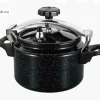
I've ordered a cheap, small and nice looking (Maroc style?) pressure cooker. Looking to experiment with that dry distillation/ self infusion of material like sandalwood or that Irish peat for example. Perhaps incense powder as well. Which i could then infuse oil with, or follow up with an ethanol extraction, whatever comes to mind.
Screenshot_20261003-111213~2.webp
 
Last edited:
Ah, i had not really looked into al the options available. Just picked what seemed a good one from the description. Seems worth while to check it out.
La Verde is an exercise with a fixed set of notes. If i were to redo it, i might opt for violetleaf abs to do the bittergreen part instead, though i am not sure is that isnt more a heart note, now i think about it.
Never mind, good learning in getting it right with the current ingredients.
I'm also thinking that the south Indian vetiver might be a bit rough in this blend. Even when swiped neat its one of the mildest i had around.
Had, because meanwhile i got myself some Madagaskar and i have a vetiver coeur inbound (fractional distillation). I like a sharp bittergreen open for this blend but feel it should soften after that initial punch. So by the time i can judge the current version i should have some options for the next step.
 
Inspired by this thread 'double checking what this thing is...' https://www.ouddict.com/threads/double-checking-what-this-thing-is.11009/
I've ordered a cheap, small and nice looking (Maroc style?) pressure cooker. Looking to experiment with that dry distillation/ self infusion of material like sandalwood or that Irish peat for example. Perhaps incense powder as well. Which i could then infuse oil with, or follow up with an ethanol extraction, whatever comes to mind.
View attachment 56769
While the pot that inspired me, apparently is not used for dry distillation, i am keen to give it a try anyway as it would give me a third way to process material. Got myself a little shopping list for things i would like to try, apart from the sandalwood, such as boswelia, myrrh and onchya. I'll figure out how to proceed on the fly.
 
While the pot that inspired me, apparently is not used for dry distillation, i am keen to give it a try anyway as it would give me a third way to process material. Got myself a little shopping list for things i would like to try, apart from the sandalwood, such as boswelia, myrrh and onchya. I'll figure out how to proceed on the fly.
I do have some second thoughts about such a pot being over complicating things, as the same effect may be possible making a (flat) tinfoil package and put it in an oven, which would keep fumes closer to the material too. Not sure if im overlooking something with that alternative 🤔
 
I do have some second thoughts about such a pot being over complicating things, as the same effect may be possible making a (flat) tinfoil package and put it in an oven, which would keep fumes closer to the material too. Not sure if im overlooking something with that alternative 🤔
That might work better than a pressure cooker. At least mine doesn't seal until pressure builds/seals wet. though i've never tried to run a preessure cooker dry. I assume vapor pressure is needed to seal.
 
That might work better than a pressure cooker. At least mine doesn't seal until pressure builds/seals wet. though i've never tried to run a preessure cooker dry. I assume vapor pressure is needed to seal.
Brought a 5 gr sample in foil to work where i have a non-food oven to run a trial.
 
Brought a 5 gr sample in foil to work where i have a non-food oven to run a trial.

So you are taking a nugget of a specimen and baking it in a folded foil pouch, then rinsing any residue that is deposited on the foil with a carrier? do you plan to extract heated specimen itself as well?

these little micro high temperature experiments are intriguing, nice to see folks like yourself and TGA experimenting in earnest.
 
I recall a very simple device for demonstrating the concept of dry distillation from my freshman year of high school:

A test tube containing small pieces of wood is held in a clamp over a burner; the tube is corked with a stopper with a single hole and a glass tube through it that travels some distance to a second test tube. I don't quite remember how that second test tube was configured but I think the glass tube went through a stopper pretty much the bottom of the tube. I imagine the stopper would've had to have a second hole to vent any pressure that builds…

The test tube containing the woods splinters is heated which quickly drives out all the oxygen and then slowly reduced to a more or less charcoal skeleton by heating in the absence of oxygen. I remember at least several drops of a brown strong phenolic / smokey smelling liquid that had both water and oil phases accumulating in the condenser test tube.

When we did this we put a single broken wooden splint into the testtube, I imagine if this was modified slightly you could actually get enough to dissolve in a carrier and then experiment with meaningfully at least as far as personal fragrance goes. The intensity I remember was quite strong so it seems like a small amount would go a long way compared to many other materials. Of course there's always uncertainty about skin safety…
 
Good thinking. At least cheap toaster ovens, lab ovens, air fryers etc are all readily available, so not to use your kitchen oven.
Well i did 2 attempts but didn't manage to get any change in colour that would suggest pyrolyse. The wood did release its creamy fragrance, but didn't notice anything of a deposit on the foil. So either the thermostat of the oven is way out of wack or the foil cant conduct enough heat to the wood this way.

Now running 2 tests with oak snippets. One in tinfoil weighted down to the bottom of a fryingpan with the hotplate set to 160 degrees for 30 minutes.
Another one in the domestic oven set to 180 degrees for 30 minutes.
Will compare the colour and scent to hopefully learn more.
Not that i want the wood to burn but i need to know when/ where it does.
 
So you are taking a nugget of a specimen and baking it in a folded foil pouch, then rinsing any residue that is deposited on the foil with a carrier? do you plan to extract heated specimen itself as well?
Yes these are just tiny tests to see if anything goes at all. But eventually i would probably extract everything.
I remember at least several drops of a brown strong phenolic / smokey smelling liquid that had both water and oil phases accumulating in the condenser test tube.
Yes i would have expected at least some tiny specs of something non woody. But i pretty much ended up with the same looking wood as what went in, it just released some of the creamy notes.
Thus now running some follow up tests with oakwood to see when and how i get it to change colour.
One i know i can burn it, i can adjust to find the sweet spot for best aroma.
 
Yes these are just tiny tests to see if anything goes at all. But eventually i would probably extract everything.

Yes i would have expected at least some tiny specs of something non woody. But i pretty much ended up with the same looking wood as what went in, it just released some of the creamy notes.
Thus now running some follow up tests with oakwood to see when and how i get it to change colour.
One i know i can burn it, i can adjust to find the sweet spot for best aroma.
IMG_20261005_173216_2.webp

There we go. Top half is from the frying pan, darkened and some residu on the foil.
Bottom half is from the oven. Colour unchanged and zero residu. It did release fragrance like the sandalwood did + some moisture from the (dried) wood.

Both smell similar but the darker one is a stronger more pronounced version.

Dont immediately get an ahh so i need to do this and that erlebnis 🤔

Edit: i did manage to cancel the pressure cooker order, which i think is good because either way it is better to keep everything in the more confined space of a tinfoil package. If only because with sticky resins i can opt to simply include pieces of the foil into the tincture. So maybe the frying pan is sufficient as i can adjust time and temperature which together with knowledge is all i need. Or so i think 🙂
 
Last edited:
Well i did 2 attempts but didn't manage to get any change in colour that would suggest pyrolyse. The wood did release its creamy fragrance, but didn't notice anything of a deposit on the foil. So either the thermostat of the oven is way out of wack or the foil cant conduct enough heat to the wood this way.

Now running 2 tests with oak snippets. One in tinfoil weighted down to the bottom of a fryingpan with the hotplate set to 160 degrees for 30 minutes.
Another one in the domestic oven set to 180 degrees for 30 minutes.
Will compare the colour and scent to hopefully learn more.
Not that i want the wood to burn but i need to know when/ where it does.
it occurs to me that anything that would vaporize out of the wood might also vaporize off of the foil because the heat is coming in from the outside so the foil is going to be at a higher temperature than the wood and it can't function as a condensing surface.

maybe you got some residue using the pan because you had uneven heating: a hot side and a cold side, since you're primarily heating by conduction from the side touching the pan
 
it occurs to me that anything that would vaporize out of the wood might also vaporize off of the foil because the heat is coming in from the outside so the foil is going to be at a higher temperature than the wood and it can't function as a condensing surface.

maybe you got some residue using the pan because you had uneven heating: a hot side a cold side since you're primarily heating by conduction from the side touching the pan
Good point.
 
Top