Al Shareef Oudh no problem it wasn't an order anyway. Just a simple email. No worries about it, too long has passed anyway 🙂


Oh cool. I'll check the book out soon.


Oh yes even in the martial arts world there has been a loooot of debate and argument between old, purists schools and new schools that branch off with new stuff.


Very interesting fusion. If at all possible, could you share a comparison of raw materials for any of your two oils? Perhaps a wild and a plantation, or two wilds of different grades, etc. For us consumers to visually learn some of the differences. (Ceen please. I really want to see its wood. Chinese..mmm)


Nice info there about the distillation legacies. Since you are working with them I'm assuming you share most (if not all) their ideals on art and rules of distillation. Could you share some of those ideals and rules with us?
 
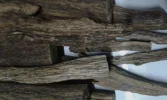
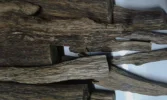
@Russian Adam alhamdolillah the wood we used for our 2 Sri lankan experiments was actually resinated through the middle too. You might just be able to pick the grain out from this picture,

[Ouddict.com] Oud Distillation

This is actually wood from the new batch, its been processed for cooking so i'm afraid i cant give you better photos. But as youve mentioned earlier the proof is in the smell, and im sure it will be easy to see that this is high grade, high quality as per Taha's grading system.[Ouddict.com] Oud Distillation

/monthly_2016_09/58092855b4c5e_SriLankasmalllogs.jpeg.6dab145adf83b52c80cc17860f51b6d6.jpeg

/monthly_2016_09/58092855b7054_SriLankasmalllogs.jpeg.ad379922c90012fb9190cb57b4a3ac10.jpeg
 
Abdullah even me I cant see the images I think we need to wait until they fix all problem soon inshallah
 
@Faizal, thank you for sharing the pics. I was referring to you the pic you previously posted.


This one… hmmm… can not find them now...


It is clear that the skin is dark and inside is not.


This is not to say that it is inferior raw materials… it is in fact superb…


I only want to emphasise that logs like that , black out side and light inside are common in wild as well as in farmed agar woods of almos every specie.


In indonesia it is a well known raw material for making beds. Some have rings inside also, some not. Some can be cleaned and will look exactly like the one we used for Koon Mai Wan.


@ Mandeel, if you want to have a better view on Wild Thai agarwood you better contact some hunters ( or those who focus on making Wild Thai agarwood oils) not plantation owners or experts of farmed agarwood. If they can replicate the pieces of any shape or even sinking grade agarwood in plantation does not mean that those are not exist in wild.
 
Last edited by a moderator:
@Sharif,


please explain why you can not show the pics of your raw materials? I understand no sharing the distillation unit design, condenser design, secret distillation technics, the yield and other important aspects… but why can’t you just show your various raw materials so we can benefit at least a little. Otherwise it seems that you have an intention to save the world from hunger… yet not sharing any food with others…
 
Last edited by a moderator:
It looks like troll-crony army are out enforce trying to deflect the discussion. Thanks @habz and admin team for clearing out the crony gang.


m.arif, Adam, we describe our oils in the most accurate way possible and also touch upon the raw materials we use within our description. Our model is not to buy the raw material today and cook it tomorrow. Some of our raw material have been purchased years ago and are stored in a regulated cared storage. Our oils get cooked and sit in aging storage before we release them, some have been sitting for a decade others for longer. Very seldom do we release a project right away. Most the oils we release are many years old cooked by us, not a third party, and because we have different facilities operating at different cycles, we do not see any value for our business taking photos of bags of crushed wood. Please keep in mind the online side of our business is fairly new and it forms a small part of our business. For others it is about taking the consumer on a journey as they themselves explore and learn. I appreciate that model and what they do, but it doesn't work for what we do.


There are genuine consumers on here who have purchased our products and asked detailed questions and we have provided them with the details they sought, it has been great interaction for both parties and a awesome learning platform for them, if they wish they can jump on and add.


As with regards to sharing knowledge with others, we have happily answered questions, provided sketches and drawings, detailed explanations on every topic that we presented. That is what is considered food for the mind, I am not into the business of presenting candy for the eye. I also want to be very clear @Adam, you can take what we present or leave it, the purpose is not to convert you or your mates, the purpose is for the consumer to read, pause and ask the questions. Knowledge with the consumer is power in the consumers hand to wield as they like. When the consumer is aware then they themselves can save themselves from inaccurate information.


I find it interesting that both yourself and m.arif and those whom you collaborate with focus on the least value add, please challenge the concepts I presented. I encourage you as I did earlier, focus on the issues, ask the questions where you have honest query, challenge the ideas that is what will lead to learning.
 
Last edited by a moderator:
Al Shareef Oudh Thanks for taking the time to respond. Correct me if I'm wrong, but it seems that you're assuming I'm together with Adam on pressing the issues we mentioned. I'm only one of Adam's customers. If you're referring to Ensar, I have no relation to him whatsoever..not yet atleast. Taha?I've met him, and discuss the things one usually would with vendors. Had you been close I'd love to visit you anytime too Shareef. The email I sent a few weeks back was exactly for that purpose, since on your website it seems there is a Malaysian branch or something like that.


Those whom we collaborate with? Wow..okay..I'll ignore this part just for the fact that it wont contribute to the discussion if I want to keep addressing it..So, before things get even far off track, I apologize if my posts pressed the wrong buttons on your side.


Adam brought up some points that I found interesting, thus you see me asking about the raw materials as well.


I'll summarize the points that I really would like to learn, and if other readers find it irrelevant or of little significance, do point it out. I'd appreciate it.


1. I want to learn, to whatever extent possible, to be visually to differentiate between different grades/ qualities of wood , wild /plantation etc (in this case by looking at pictures by vendors on this forum). I wasn't expecting such a long response. A respond like "Sorry we don't find it necessary to post pictures of our raw materials right now", or something to that tone, I would be content with it and move on. Even if you said "No I don't want to, just because" I wouldve left the issue alone and moved on.


2. As you mentioned that rules to the art of distillation has been established in the industry, I'm interested to know what some of them are..in simple, layman points. Why? So that I can add it to my analysis when studying what other vendors produce, and the ideals they propagate, as a comparison. But if for whatever reason you are unable/ unwilling to write it here , it's fine. I'll be content with that and move on.


I apologize if some of my posts made any individuals felt offended or provoked..if there was none, ok my bad. I'll try my best to discuss here in the most suitable way for learning objectives. If you feel that the posts you made before are sufficient to answer my curiosities and that I'm bringing it up again and agaim , then it's ok. I will reread the information you wrote and be off. The reason why similar questions keep coming from me is that I don't feel, for myself, that I've gotten information that satisfies my curiosity.


Best regards
 
Last edited by a moderator:
@ Mandeel, if you want to have a better view on Wild Thai agarwood you better contact some hunters ( or those who focus on making Wild Thai agarwood oils) not plantation owners or experts of farmed agarwood. If they can replicate the pieces of any shape or even sinking grade agarwood in plantation does not mean that those are not exist in wild.


Russian Adam


so you work in distillation 2 year and become more expert than this guy! that you know him very well he is expert & distiller and he have special distillation system & plantation owner & supplier more than 20 years & he have his huge sources & he take the job from his old father & sale very rare wild agarwoods to chinese and korean & you say this man are not expert!, do you remember when you msg me asking for sri lankan source ! 🙂
 
Last edited by a moderator:
dear readers, we wanted to remind you and ourselves that the differences of opinion must not became a cause of hate and fight between individuals rather it must be a source of inspiration and other beneficial actions.


thank you Sharif for your detailed reply. I love you for the sake of God almighty for being a believer, an honest person and for being involved in this beautiful art of creating oud. I apreciate you strictly following the well established tradition. Asking for the photos of raw materials I was not referring to your aged oil, that would be a silly thing to do, rather I hope to see at least some of the raw materials used for countless number of projects that you have always running in many facilities you own. Not every single bag of wood you process but some examples for instance: "this is a typical grade for our affordable oils" , "this is an example of the wood we use for our higher grade oil", "this for organic oil" and so on. If you still decline... ok... I can not force we just willing to learn.


Also please share what is your part and the actual job you personally do durring the distillation? What you see is the most important factor when the artist needs to be present? Is it the selection of raw materials and design of distillation method? Is that a personal presence durring the whole cycle of distillation or a certain part of it ( for instance doing the soaking in person to examine the scent development of the bio mass durring the whole soaking period. Or for instance being present at the beginning of the distillation to make sure that only the selected raw materials going to the pot. Or perhaps be present only for collecting the oil to make sure it is not polluted by some invoronmental factors.. perhaps you feel that the artist not have to be there at all and if the ortodox, traditional , secret methods are tought to the staff and followed strictly then the success is guaranteed? as an open learner who always want to improve I am really interested and want to know your (and other people who are involved in the process of distillation) stance on this...
 
Russian Adam well I have bad experience with you but I forget that from along time and I always make nice comments for u in bn and even I welcomed you here but when u try playing under table and attack others here i can also show what I have information, I speak directly with you no hide words or others speech's ! Don't let others use you here ...
 
@ Mandeel, i also love you for the sake of God Almighty for being a beliver, honest individual and oud lover. Please refer back to my posts and make sure that I never ever claimed to have a superior knowledge that any other person. I only advised you to seek knowledge from different hunters, distillers in Thailand and not a single source.


Not sure which person/expert in Thailand you refering to. Please specify so I can tell you about my personal experience with this person if he is the one I am thinking but I am not sure may be you mean someone else.


Not sure why you mentioned our private conversation about me asking you if you ever purchased agarwood from one specific source in Sri Lanka and weather you think it is reliable. Yes I do remember. Why you ask this?
 
@ Mandeel,


please share your negative experience with me or any other vendor. I mentioned this before and I will repeat that we distillers always benefit much more from a negative feedback then a positive one.


why? because we want to learn from what people say and improve our ways and our oils...


as you said before many get mad when see a negative feedback about their oil, however we see there a benefit only
 
Last edited by a moderator:
@m.arif


Now that your questions are less about Al Shareef Oudh and more about learning I will try to answer them;


1. Oudh wood is classified in a few different ways in the industry. Some parts of the world utilise the lettering system, some the numbering system some the word system. Others just mix it and match it as they feel. These systems are also not universal. For example two vendors using the lettering system calling a batch AA does not mean that they are exactly the same.


I will summarise based on the main grade and not the sub grades. Some people do actually grade sinking into different grades and so on.


Those who use the lettering system do so as; sink, A, AA, AB AAA, AAAA, Sink.


This system is fairly interesting, the below is simple summary


A, is used to indicate one side has oudh resin present on it, the middle and other side dont,


AA, is used to indicate both sides have oudh resin present on it and the middle doesnt


AB, is used when one side has oudh resin present and the other side has partial presence, and the middle doesnt


AAA, is used to represent resin running from one side to the other side


AAAA, the whole piece is covered in resin of high density with minimal to no light colour wood.


Sink is used to indicate that the wood sinks in the water when it is placed in water.


There is another form of this lettering system, A1, A2, A3, A4...I have ignored this system as I find it the least accurate.


Those who use the numbering system do so as; 1st grade, 2nd grade, 3rd grade, 4th grade, 5th grade, 6th grade


In this system the highest quality in the 1st grade, which is equivalent to a sinking grade the 6th grade is representative of a piece with not a lot of resin in it, like an entry piece.


Those who use the wording system do so as; low grade, medium grade, super grade, double super, triple super, Sink


In this system it isnt so much based on the sides of the piece, rather on how much resin is present on the piece vs white wood. It is self explanatory and easier to digest as a beginner.


Please note this is a simplified version of each, I have removed the sub grades as it will make it too confusing.


As with regards to photos, I had already answered that in my previous post, I encourage you to read it again.


2. to your second question, the art has the following forms;


Water Distillation ; the bio matter is completely immersed in water and the still is brought to the boil. This is a important principle in the art of distillation, when the artisan applies this method one of the most important functions of this principle is that the bio matter and oil are protect from the direct heat to a certain degree as the surrounding water works as a cooler.


Steam distillation ; the steam is generated in a separate chamber and the bio matter is in a different chamber. The steam is passed through the matter usually from the bottom up. Regulating the temperature of the steam is very important when applying this principle, if the steam is too hot it will destroy the essential oil and burn the bio matter, however this method has better output.


Hydro Steam; is a form of distillation where the biomatter sits in the same chamber as the water, separated by gap. This is a more efficient form when working in non insulated environments.


In all three principles, the steam runs through into a condenser where the vapors are cooled into a distillate and the oil is separated in a separator.


These are established rules.


Then there are rules pertaining to each individual aspect, such as the size of the condenser, the type of condenser for what you want to achieve, the pot and the different affects each pot/condenser material has on the final product.


For example; copper has natural antimicrobial properties which results in a smoother oil because it kills off any odors and by products associated with microbes.


From the brief summary above you should be able to see that straight away a distiller is guided by these rules, in some places limited in others options are provided to them. However we can not by pass these.


I could go into much greater detail for every aspect such as how to calculate the condenser size, how the cooling water should be fed in the condenser, the orientation of cooling pipes, Pot shapes, sizes, material and orientation etc, but for the purpose of your question the above is more than sufficient.


@Adam,


May the One for whom you love me, love you.


I will get to your question tomorrow insha'Allah.

 
Last edited by a moderator:
@Adam


Regarding your earlier question;


what types of wood do we typical use?


We utilise a wide range of woods, from the A grade all the way to the sink grade in our cooking. Recently we cooked a Kalimantan oil that forms a piece in another project the majority of the wood was sinking wood that we had acquired some years back.


As with regards to our organic oils, we utilise mainly utilise wood that is AA and greater in quality.


I have complete life cycle involvement in every oil that we create. I will initially spend a fairly long time with the wood. Sometimes I will not distill a wood and sit with it for a few years, burning it, chewing it, smelling it and creating imagery in my mind. Sometimes the conceptualization of a oil comes to me very rapidly and I have to write it down, draw the equipment and capture the image at the moment the flood gates of inspiration open, other times I will have to spend a lot of time putting the pieces together. Referring back to my father for his thoughts and inspiration at the same time the long legacy of our tradition is always present to guide me.


I check every batch of wood we purchase, I smell it raw, burn it, chew it.I spend a lot of time with the wood. What I was taught at a very young age was, the wood is what carries the life of the oil, understanding the pulse, aroma, rhythm of the wood will ensure you produce oils that have heart. This is across all three facilities.


From there I will work on the image of the oil in my mind, if we can create the oil with existing equipment I will sketch what adjustments need to be made. If our current gear cant do it, I will design a new setup. We work with some of the worlds leading still makers to implement our designs.


I always pilot in our lab before full scale distillation. I tweak and fine tune the whole process before we roll it out to the factory floor. I have posted some aspects of our lab before in the BN thread.


Once I have the process finalised and I am happy with the final product in the lab, then we will implement in larger scale. I draw up the formulas, equipment based on the wood that I studied, how fine the wood should be ground, how long soaked, and how it should be cooked ; temperature, condenser types, start stop cooking or continuous cooking, varied temperature cooking or constant temperature cooking etc.


Once the guys on the floor take all the instruction I will usually be physically at one of our three facilities and hands on implementing with them what I devised in the lab. Once the oil is collected, it returns back to our lab for curing and aging. Again as with the other processes I will cure and age all the oils myself at our lab.


I hope that gives you an insight in what we do.
 
Last edited by a moderator:
Thank you for the load of information about wood grading and technicalities of distillation. Very helpful. So what's the limit to adhering to these established rules of distillation? e.g. If he does so and so, he's violating the established rules.. Are there any examples ?


Plus, what about the "King" grades I've seen people use? Also I've heard that some grades are not suitable for burning if it's too high, also the case for making oil. Any comments on this Al Shareef Oudh ?
 
m.arif


just a few examples to illustrate.


example 1;


if the flow pipe size is too small compared to the pot, there will be a considerable pressure build that can causes serious injury.


example 2;


overloading a pot.


example 3;


soaking woods in unhealthy conditions, these create health hazards.


regarding , king grade, royal grade, super king, these are some terms used in some areas, I have left these out because there is no real way to scale them.


There are some types of woods not suitable for oil as the resin formation has solidified beyond the possibility of breaking them down to get any oils in the normal distillation process. You can still however use solvent extraction for those.


I am not sure what you are referring too regarding not suitable for burning? do you mean low quality not worth burning? Certain qualities one does not burn as it isnt worth burning.


@oudamberlove


Al-Jawharah has so much heart, sometimes I just open my personal container of Al-Jawharah and allow the scent to wrap me, it brings back to me the journey I took when drawing it together using different ingredients as my paints.
 
Last edited by a moderator:
Top