There's no need to even attempt

I was told at the dawn of my oud journey: when it came to the really high and oils, if you have to ask the price it is out of your budget haha
Yep this is how I feel too. For example if something is like $2000 for .2g’s I probably won’t ever smell it. Not because I can’t afford it but because my wife would end me if she found out. Which she always does.
 
I just meant it light heartedly of course! I very much appreciate it when vendors are upfront with their prices and don't leave us guessing!

It was somebody's way of letting me know that oud could be very expensive long ago...
Yabaan was publicly available sold on our website, and it sold out, so the price was there for all to see, upfront.

Now I have a couple grams which was for my own keeping.

Those who know kyara and it's cost, and are interested in it, know they can message and ask for the price of Yabaan. I don't believe in just sharing prices in public of items that is not going to add value to most people's consideration.

Funny how recalling a memory, stated in jest, can come across the wrong way!

I was trying to reassure the other guy that it's OK to ask and that my comment wasn't intended to try to "scold" him for asking publicly about a price - comment had nothing to do with your marketing of this product!

On that subject, I would have no expectation that an old sold out product would be for sale at any price, I think you misinterpreted but I'm glad you got a chance to clarify anyway
 
Last edited:
Just landed:

Al taaj and raja hijau 2 from Habz.

First impressions are good, I can see why these oils have gotten so much praise here.

To my understanding both are still a bit young so I can imagine they will get even a bit better over time. Same with the fili oil I got from him that I can’t recall the name of.

Good oils which punch well above their price point. What Habz is doing reminds me of the old days when both AA and EO were constantly releasing high quality oils. Habz just seems to be on a roll the last year and continues to release oils like this, hopefully it continues.
 
Numan - Yusa

Distinct rubber/tyre note and just very dark initially. Dry down is absolutely beautiful, nothing at all like the top notes. There's a prominent sweet note which reminds me of vanilla with some earth and floral notes. As usual, this a bedtime swipe which I'm enjoying immensely
 
Thuraya - Al Shareef

Malaysia is my favorite region. Have had the pleasure to try some top Malaysians from EO, AA, SQ, Al Hashimi.

Thuraya is really really nice. It’s definitely a mainland Malaysian. Sweet with this apple note. With a wonderful backbone of classic Malaysian wood. This is a bright yet classic Malaysian style oud. This is not your East Malaysian green/yellow type of Oud. This is not new gen. Zero barn or off putting notes. I don’t see a lot of these Malaysians lately.

Among top tier Malaysians. I hesitated to post this as to avoid making it sell out.
 
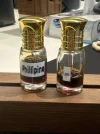
Philippine Oils sourced from a collector, wore 2 side by side to compare. I’ve been wearing them for quite some time now (almost 5 months).

Leyte
Amber red in color, oceanic hints the typical notes you’d expect from oils from the region. Very refined and subtle. Almost everyone here in the GCC markets Philippines Oud oil profile as “Cambodi Silani” this is one of those I’d say holds up well to that sentiment.

Philippines (multiple regions)
Dark brown color, This one is slightly minty and leathery top notes aren’t very sharp. The “Silani” line here is more vague not as prominent as the Leyte. What I like about this one is the dry down, very velvety.

I also noticed that old heads really these oils. Could be due to the quality of the wood used being similar to quality of older ouds. Both oils are powerful and very relaxing when breathing it in deeply. I have to try some other oils from artisanal vendors to compare the styles.
 

Attachments

  • [Ouddict.com] Oud of the Day
    image.webp
    140.5 KB · Views: 61
Last edited:
Philippine Oils sourced from a collector, wore 2 side by side to compare. I’ve been wearing them for quite some time now (almost 5 months).

Leyte
Amber red in color, oceanic hints the typical notes you’d expect from oils from the region. Very refined and subtle. Almost everyone here in the GCC markets Philippines Oud oil profile as “Cambodi Silani” this is one of those I’d say holds up well to that sentiment.

Philippines (multiple regions)
Dark brown color, This one is slightly minty and leathery top notes aren’t very sharp. The “Silani” line here is more vague not as prominent as the Leyte. What I like about this one is the dry down, very velvety.

I also noticed that old heads really these oils. Could be due to the quality of the wood used being similar to quality of older ouds. Both oils are powerful and very relaxing when breathing it in deeply. I have to try some other oils from artisanal vendors to compare the styles.
I think Sulayms Leyte N2 goes well in those directions of the 2 oils you mentioned. Its not completely new gen and not barny or very learhery and has the nice interplay of aquatic top notes and resinous oudy heart & drydown. Would be interesting to see a comparison.
Also Habzoud has one (I think it sold out now). I didnt try it but I tried a bunch of other oils from him and I know, it is good and would be a nice comparison too.

Usually artisinal Philippines oils are done new gen as it suits the profile best and showcases the beautiful silani/philli top notes
 
My initial thoughts of comparison was the following
1. Imperial Oud - Manlindang
2. EO - Pinoy LTD
3. The Oud Lab - Fili Densho
4. ASO - Al Malek Qadeem

I need to acquire them first, I’m sure some of them will be difficult to source but I’m in it for the journey 🙂
I know Pinoy and AM Qadeem are amazing.

Completely different from each other though. Trying to compare them with each other would be kind of useless and it would take you further from what the oils are actually like.

I had Abu Yog last night and that one is also great. Still, no point in comparing it to Pinoy or AMQ.

The Philippines is a string of islands like Indonesia. When you get a Borneo or Sumatran or Papuan oud, they are usually not referred to as “Indonesian”. That’s because it’s a useless designation. That refers to a political border, and politics has very little effect on agarwood. Naming them by the island they come from is much more useful.

Al Malek Qadeem is from Bellatan which is closer to Borneo than Leyte, and it doesn’t smell anything like either. Just another island in the ocean like the others, and should probably be called its own region.

In my head, Leyte is a region of oud, and the other ones I’ve tried from random islands in the Philippines are from other ‘regions’. No connection to Leyte oils except that the Spanish also conquered the island they come from.

 
I know Pinoy and AM Qadeem are amazing.

Completely different from each other though. Trying to compare them with each other would be kind of useless and it would take you further from what the oils are actually like.

I had Abu Yog last night and that one is also great. Still, no point in comparing it to Pinoy or AMQ.

The Philippines is a string of islands like Indonesia. When you get a Borneo or Sumatran or Papuan oud, they are usually not referred to as “Indonesian”. That’s because it’s a useless designation. That refers to a political border, and politics has very little effect on agarwood. Naming them by the island they come from is much more useful.

Al Malek Qadeem is from Bellatan which is closer to Borneo than Leyte, and it doesn’t smell anything like either. Just another island in the ocean like the others, and should probably be called its own region.

In my head, Leyte is a region of oud, and the other ones I’ve tried from random islands in the Philippines are from other ‘regions’. No connection to Leyte oils except that the Spanish also conquered the island they come from.
Thank you that makes sense… I was scratching my head trying to understand the connections between some of these.
 
I know Pinoy and AM Qadeem are amazing.

Completely different from each other though. Trying to compare them with each other would be kind of useless and it would take you further from what the oils are actually like.

I had Abu Yog last night and that one is also great. Still, no point in comparing it to Pinoy or AMQ.

The Philippines is a string of islands like Indonesia. When you get a Borneo or Sumatran or Papuan oud, they are usually not referred to as “Indonesian”. That’s because it’s a useless designation. That refers to a political border, and politics has very little effect on agarwood. Naming them by the island they come from is much more useful.

Al Malek Qadeem is from Bellatan which is closer to Borneo than Leyte, and it doesn’t smell anything like either. Just another island in the ocean like the others, and should probably be called its own region.

In my head, Leyte is a region of oud, and the other ones I’ve tried from random islands in the Philippines are from other ‘regions’. No connection to Leyte oils except that the Spanish also conquered the island they come from.
Thank you for sharing, honestly my parameters for the comparison was that they’re all from the Philippines but it seems it’s more nuanced. Either way I’d love to try them all! Thanks again!
 
Thank you for sharing, honestly my parameters for the comparison was that they’re all from the Philippines but it seems it’s more nuanced. Either way I’d love to try them all! Thanks again!
Of course, but agarwood doesn’t know it lives in the Philippines. It’s about the environment and the way that genetics of agarwood were distributed.

Pinot and AMQ are definitely both worth trying. I don’t know about the other two.
 
Of course, but agarwood doesn’t know it lives in the Philippines. It’s about the environment and the way that genetics of agarwood were distributed.

Pinot and AMQ are definitely both worth trying. I don’t know about the other two.
Could you reference if there Is like a map that’s shows the profiles/regions and the political boards? That would be really helpful.
 
Could you reference if there Is like a map that’s shows the profiles/regions and the political boards? That would be really helpful.
The map with political borders is just called the map.

Maybe there’s a map somewhere that shows where agarwood grows but I don’t know about any. I just hear about a forest where a certain wood or oil comes from and I make a mental note.

Agarwood covers a large area. When you see an oil or wood from any region just look it up on google earth and you will begin to have your own mental map of it.
I meant without the political boards. But understood if I find one I might share it with everyone 🙂 maybe hang on a wall somewhere haha!
 
The map with political borders is just called the map.

Maybe there’s a map somewhere that shows where agarwood grows but I don’t know about any. I just hear about a forest where a certain wood or oil comes from and I make a mental note.

Agarwood covers a large area. When you see an oil or wood from any region just look it up on google earth and you will begin to have your own mental map of it.
There are in fact maps whose purpose is to show dominant ecosystems and such as opposed to human made geographic data. Likewise there are maps that just show rock strata across large areas, etc. Might have to contact somebody at a university to figure out where to find maps like this. Would probably make your local librarian's day if you went down there and ask for help tracking them down.

The ecosystem/biome maps may not show you literally where a specific species of agarwood grows but if you know what type of trees or forests it is associated with, you can get a pretty good sense by looking at the ranges of associated vegetation.

this may not be exactly what you're looking for though
 
Back
Top