Oudamberlove
Member
Al Hashimi Akkad
A little spicy, then a little sweet,
resinous, and oudy.
A little spicy, then a little sweet,
resinous, and oudy.

These are both *excellent* oils. Kanbi Koh should maybe be called Candy Koh 😂. Your write-up does them justiceHello Ouddicts 🙂
Today is special as I swiped amazing oils ^^
Olefaktory Very Berry Thaï Cherry 🍒
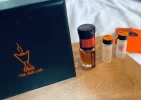
The Oud Lab Kanbi Koh
VBTC is unbelievable… from plantation…No way !
The opening of this oil is spectacular !
I get strong powdery resinous almond and berries almost like King K Nam opening !! Wouah
The creamy bitterness à la AA Kham lao with Hay and honey is addicting !
After few minutes or so, à juicy Cherry note coming in front of me and saying
« What? Don’t you ever smelled Cherry before » ^^ but here it’s Oud oil what we are talking about so what the F… !
To be honest it’s a very clean new gen Thai oil and I never smelled something better than this Before !
Full clean new gen without any Barn of something else than clean !
The distillation was made perfectly !
I could believe that is from Taha really !
In terms of top notes , cleanliness, mind buzzing … it’s one of the closest oil to Agar Aura oils I smelled !
It’s better than Kham Lao top notes IMHO … need to see the dry down …
I am really really impressed by this oil from Ejay…
The only Thai oils I tried was old traditional oils like Lao Xiang or Lao Shan… but it’s not comparable as it’s too much different !
VBTC is bright ! Sharp ! And the opening is insane !
Ejay you are an Artist !
Now TOL Kanbi Koh … what can I say…
😱
I took my time to understand this HUGE OIL…
Don’t you remember when you was young… sweet candy carnival smell ? 🍭, marshmallow creamy sugary pinky cotton candy !
These notes are the breath you getting in your face with Kanbi Koh !
Top notes are here subtle but you can’t miss it !
Fabulous vaporous steam of sweet resinous, Kinamic vanilla licorice and cinnamon coming up to your nose and the feeling is phenomenal !
This oil remind me Emperor Guan Yu from Jinkoh store , with some different faces !
It’s stronger and the top notes are just unbelievable !
The evolving is dangerous and falling in Pure Yellow kinam warming at low temp … it’s just unbelievable !
How an oil can be sooo satisfying !
It’s musky and pheromonal ! Gourmand !
I would like to eat this vanilla cake !
In my honest opinion, this oil is the most Kinamic oil I have ever experienced with emperor Guan Yu and Emperor of China !
I would say it’s stronger than EGY first hour, where EGY need 1 hour to sharing her power!
Kanbi Koh has better top notes … but less clear and clean than Emperor of China and Emperor Of Kedah !
It’s between EGY , EOC , and EOK
I could believe it’s from Marius ^^
Kanbi Koh is a real Cloud of kinam !
I never experienced something as crazy in terms of vapor !!!
Small swipe in my beard and let’s go for all the day until I wake up I smell it in my pillow !
I get also some touch of Emperor of Kedah balsamic sweetness and purple flower with the richest resinous oudiness quality I smelled !!!
The thing is … I alerady smelled something lightly similar in few beautiful oils by short vapor during the dry down of old traditional oils … but Kanbi Koh is Full of this scent that I was looking for since longtime !
Maybe some Ouddict loved Lao Shan or Lao Xiang because of the full spectrum of these oils …
Kanbi Koh is also full spectrum !!!
Since top notes to base note … the dry down is quite similar to the opening… the evolving is more about subtle notes … don’t expect lots of evolving but a subtle evolving of your kinam sliver in the heater since 70 degrees to 120 degrees.
The most beautiful wild Thai Oil I have experienced in my life !
It’s thick , in terms of viscosity but also in terms of smell ! It’s deep sooo deep ! You can’t touch bottom !
Subhanallah ! This oil is exactly what I am looking for in my Oud journey
Two Thai oils , Two different ways… new gen or Traditional thick oil …
Kanbi Koh is unreal and Mind Blowing
Very Berry Thai Cherry is really mind buzzing
I wish you all a very Gooud swipe of the Day 🙂

Kanbi (甘美) means sweet, sugary, honey-like in Japanese.These are both *excellent* oils. Kanbi Koh should maybe be called Candy Koh 😂. Your write-up does them justice


If only I had enough quantity of the freshly distilled oils to last me 10+ years 😅Feel oud bio Thai unsoaked. the sweet cherry and benzaldehyde pungent new Thai top note is finally changing into something woody, resinous and less cloying.
I think one thing that’s really been missing from all of the new Thai oils I have smelled has been enough time for them to transform from raw to matured. Back in the old basenotes days there was much discussion about treatment of freshly distilled oils. forced oxidation, exposing oils to air, “lamping” fresh oils and such. I know that the New Age oils are for the most part produced without these techniques and I’m beginning to wonder if one reason it’s done is to transform those cherry sweet sickening fresh notes into something more traditional.
Hang onto those newly distilled oils folks because I think some interesting things will be happening over the next 10 years.

Still wouldn't be enough.... 🙂If only I had enough quantity of the freshly distilled oils to last me 10+ years 😅

I have always found good content in your post, that invite for good discussion, unfortunately due to my time constraints I can't always chime in.Feel oud bio Thai unsoaked. the sweet cherry and benzaldehyde pungent new Thai top note is finally changing into something woody, resinous and less cloying.
I think one thing that’s really been missing from all of the new Thai oils I have smelled has been enough time for them to transform from raw to matured. Back in the old basenotes days there was much discussion about treatment of freshly distilled oils. forced oxidation, exposing oils to air, “lamping” fresh oils and such. I know that the New Age oils are for the most part produced without these techniques and I’m beginning to wonder if one reason it’s done is to transform those cherry sweet sickening fresh notes into something more traditional.
Hang onto those newly distilled oils folks because I think some interesting things will be happening over the next 10 years.
I have always found good content in your post, that invite for good discussion, unfortunately due to my time constraints I can't always chime in.
Age is part and parcel of Oudh. One factual element that is usually missed in the Oudh discussion is its history. People will generally speak about Oudh as a fragrant ingredient quoting classical religious text and history without making distinction between oil and wood.
The wood has been used in many traditions for thousands of years. The oil however in historical context is a fairly new thing. In the last 1000 odd years taking its beginning from Ibn Sina. Whilst there are records of different forms of primative distillation techniques prior to Ibn Sina, distillation in the modern form begins with him.
This context is very important, because within the methodology of Islamic perfumery aging is treated nearly like a separate ingredient, as such Oudh that was distilled HAD to be aged. And the modern use of Oudh that we see take its root from the Islamic philosophy of perfumery.
Here is the deviation, today most of the oils that are sold are distilled and shortly after sold. This is a practice that has been adopted from the essential oil revival of the 70s, that the fresher the oil the more better it is, this notion however is based on a treatment consumption anti oxidant contant basis, not smell, and we are in the smell business.
The key learning from this to the consumer is, don't write off oils on your first engagement with it. Time is an ingredient and a good dose of it with Oudh does wonders. Freshly distilled oils are half the story and when I see some of the newer Oudh heads exclaim what a wonderful Oudh X y z is and it was distilled last month, I think to myself you are only on the intro to the book and I wonder how the later chapters will greet you.