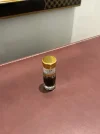
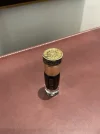
Just had an interesting experience. I found a little sample vial that had a little bit of the residue of
@mesOUD 's "Haiku" - a white CK distillation.
While this oil was quite simple, sweet and sugary to start, the oxidized residue is quite a different beast. In this case what was left was a sticky honey-like half of a drop that I was able to scrape out with a toothpick - thick like a thaqueel process oil. It had all kinds of tart tangy scintillating notes that I associate with older wild Lao sinensis oils I have smelled. Quite a bit going on in this residue - smells like a different oil entirely then when it was new! It is very interesting to be observing these types of changes in freshly produced oils.
Huge difference from the original, and while these highly oxidized residues do not age the same way as properly stored oud, they can give you a little glimpse of what might be coming down the road. The conclusion that I draw from this experience is that some cultivated kinam oils will develop more complexity and richness with time as opposed to aging to become more bland or generic.
This actually doesn't surprise me at all - given that all cultivated kinam originated from cuttings from a wild tree, the aromatic complexity of wild wood likely reflects the long amount of time that the resin and oil spend oxidizing and aging and being transformed by time.